
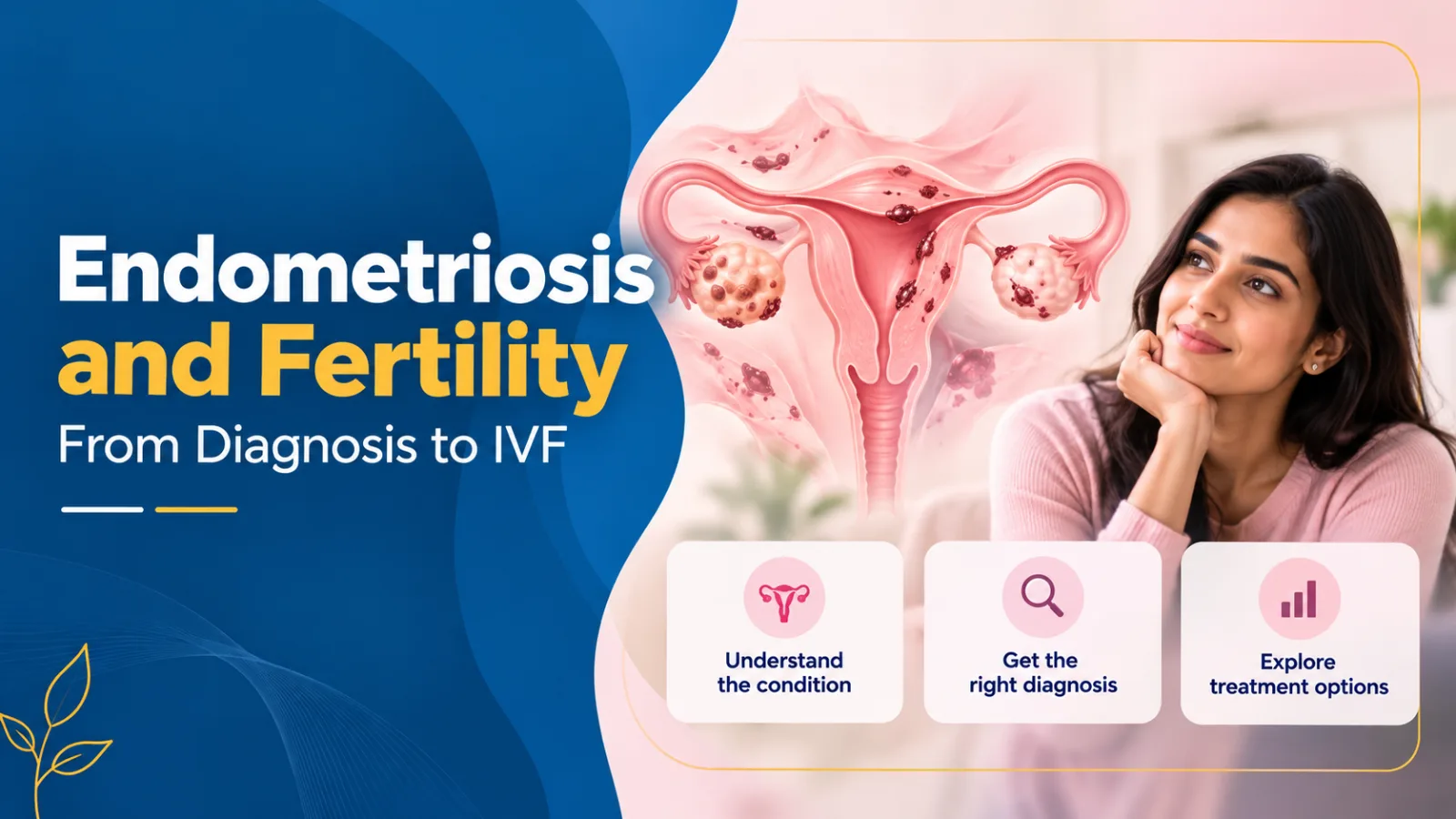
Endometriosis is a common condition that can affect fertility, but a diagnosis does not mean you cannot become pregnant. Many women with endometriosis conceive naturally, while others may need fertility treatment such as IUI or IVF.
The important questions are when the condition is diagnosed, whether you want to conceive now, how endometriosis has affected your reproductive organs, and whether surgery could help or potentially reduce ovarian reserve.
Most importantly, treating endometriosis-related pain and treating infertility are not always the same thing. The treatment approach should be based on your fertility goals.
The Years Lost Before an Endometriosis Diagnosis
One of the biggest challenges with endometriosis is the delay between the beginning of symptoms and diagnosis.
Severe period pain is often dismissed as something women simply have to live with. But period pain that interferes with your work, studies, relationships, or daily activities deserves proper evaluation.
Not every woman with painful periods has endometriosis. However, disabling period pain should not be repeatedly managed with painkillers without investigating the underlying cause.
Early assessment can be particularly important if you are planning a pregnancy.
What Is Endometriosis?
Endometriosis occurs when tissue similar to the lining of the uterus grows outside the uterus.
It can commonly affect:
- Ovaries
- Pelvic lining
- Ligaments supporting the uterus
- Bowel
- Bladder
- Ureters
The tissue responds to hormonal changes during the menstrual cycle. Over time, inflammation, scarring and adhesions can develop and may cause pelvic organs to become stuck together.
Two forms are particularly important when discussing fertility:
Endometrioma
An endometrioma, sometimes called a chocolate cyst, is a cyst containing old blood that develops within the ovary.
Deep Infiltrating Endometriosis
This form involves endometriosis growing deeper beneath the surface of the pelvic tissues. It can cause significant symptoms and may require assessment by specialists experienced in complex endometriosis surgery.
What About Adenomyosis?
Adenomyosis is related to endometriosis but is a different condition. In adenomyosis, tissue similar to the uterine lining grows within the muscle of the uterus.
It can coexist with endometriosis and may have separate implications for implantation and pregnancy.
Symptoms of Endometriosis
Endometriosis does not look the same in every woman.
Possible symptoms include:
- Severe or worsening period pain
- Pain during or after intercourse
- Chronic pelvic pain
- Pain while passing stool, particularly during periods
- Pain while passing urine around menstruation
- Cyclical bowel or bladder symptoms
- Heavy or irregular bleeding
- Significant fatigue
- Difficulty conceiving
One important point is that symptom severity does not reliably tell you how extensive the disease is.
Some women with extensive endometriosis have relatively mild symptoms, while others with limited disease may experience severe pain. Some women have no obvious pain and are diagnosed while being investigated for infertility.
How Is Endometriosis Diagnosed?
Laparoscopy was historically considered essential for diagnosing endometriosis. Current guidance has moved toward using imaging and clinical assessment as important parts of the diagnostic process.
Evaluation may include:
1. Detailed Medical History
Your symptoms, menstrual pattern, pain, previous treatments and fertility history can provide important clues.
2. Clinical Examination
A pelvic examination may identify tenderness or other findings, although a normal examination does not rule out endometriosis.
3. Transvaginal Ultrasound
A good-quality transvaginal ultrasound performed by an experienced operator can identify endometriomas and may detect deep endometriosis.
However, a normal ultrasound does not completely exclude endometriosis, particularly superficial disease.
4. MRI
MRI can be useful for mapping deep infiltrating disease, especially when surgery is being considered.
5. Laparoscopy
Laparoscopy may still be appropriate when imaging is inconclusive or when surgery is already being planned as part of treatment.
CA-125 should not be treated as a diagnostic test for endometriosis.
How Can Endometriosis Affect Fertility?
Endometriosis can affect fertility through several mechanisms.
Adhesions and Distorted Pelvic Anatomy
Scar tissue can cause the ovaries and fallopian tubes to become stuck in abnormal positions. This can interfere with the ability of the tube to pick up the egg.
Impaired Tubal Function
Even when the fallopian tubes appear open, inflammation and altered pelvic anatomy may affect their normal function.
Inflammatory Environment
Inflammation within the pelvis may affect sperm function, eggs and early embryo development.
Reduced Ovarian Reserve
Endometriomas and previous ovarian surgery can be associated with reduced ovarian reserve.
If you have concerns about ovarian reserve or AMH, you can also read our guide on Can You Get Pregnant with AMH Below 1?.
Implantation
Endometriosis may also affect the environment in which an embryo needs to implant.
Pain and Intercourse
Severe pelvic pain or pain during intercourse can itself make regular intercourse difficult, which can reduce the opportunity for natural conception.
The Most Important Question: Are You Trying to Conceive?
Endometriosis treatment needs to be aligned with your fertility goals.
Treating pain and treating infertility are different objectives.
Hormonal treatments such as combined contraceptive pills, progestogens, hormonal coils and GnRH-based treatments can be used to control endometriosis-related symptoms.
However, these treatments suppress the menstrual cycle and prevent conception while they are being used.
If you want to become pregnant, make that goal clear to your doctor.
A simple statement such as:
“I want to conceive.”
can significantly change the treatment discussion.
Endometriosis Surgery: When Can It Help Fertility?
Surgery can be useful in selected women, but it should not automatically be considered the first step for everyone.
Surgery may be considered when there are:
- Significant pelvic adhesions
- Distorted pelvic anatomy
- Severe symptoms
- Deep infiltrating disease requiring specialist management
- Hydrosalpinx affecting fertility treatment
- Specific anatomical problems affecting fertility
For some women with minimal or mild endometriosis, laparoscopic treatment may improve the chance of viable intrauterine pregnancy compared with diagnostic laparoscopy alone. However, evidence from individual trials has not been completely consistent.
The decision therefore needs to be individualised.
Endometrioma Surgery and Ovarian Reserve
One of the most important decisions concerns whether an ovarian endometrioma should be removed.
Removing an endometrioma can also remove some healthy ovarian tissue. Research has shown that AMH can decrease after endometrioma surgery, reflecting an impact on ovarian reserve. 11 - PILLAR - Endometriosis and…
This is particularly important when fertility treatment is being considered.
Routine removal of an endometrioma before assisted reproduction should therefore not automatically be assumed to improve IVF outcomes. Surgery may still be appropriate in selected situations, such as significant pain or when the cyst interferes with access to follicles during egg collection.
Before having surgery, ask:
- What is the purpose of the surgery?
- Will it improve my chance of natural conception?
- Will it make IVF easier?
- Could it affect my ovarian reserve?
- Have I had ovarian surgery before?
- What are the alternatives?
The decision becomes particularly important if you have already undergone ovarian surgery.
IVF and Endometriosis
Endometriosis does not mean that IVF cannot work.
IVF can bypass the fallopian tubes and reduces the dependence on normal pelvic anatomy for fertilisation.
Before planning IVF, your fertility specialist may consider:
- Age
- Ovarian reserve
- AMH and other ovarian reserve assessments
- Presence and size of endometriomas
- Previous ovarian surgery
- Tubal condition
- Duration of infertility
- Male-factor infertility
- Presence of adenomyosis
- Previous fertility treatment
You can also learn more about IVF treatment at Renew Healthcare.
Can More Than One IVF Cycle Be Needed?
Women with endometriomas or previous ovarian surgery may sometimes produce fewer eggs during ovarian stimulation.
In such situations, your fertility specialist may discuss accumulating embryos across cycles rather than assuming that one IVF cycle must achieve the entire goal.
The right strategy depends on age, ovarian reserve, previous treatment and individual circumstances.
Extended hormonal suppression before IVF is also an area where evidence remains uncertain, so patients should discuss the reason for any proposed treatment with their specialist.
What If You Also Have Adenomyosis?
Adenomyosis can occur alongside endometriosis.
Studies have reported lower implantation, clinical pregnancy and live birth rates and higher miscarriage rates among women with adenomyosis undergoing IVF. 11 - PILLAR - Endometriosis and…
If adenomyosis is suspected, it may need to be considered separately when planning fertility treatment.
In some situations, a frozen embryo transfer may provide an opportunity to optimise the uterine environment before embryo transfer.
Surgery First or IVF First?
There is no single approach that is correct for every woman.
Factors that may influence the decision include:
| Factor | May support considering surgery first | May support considering IVF earlier |
|---|---|---|
| Age | Younger | Older |
| Ovarian reserve | Good | Reduced |
| Pain | Severe and affecting daily life | Mild or controlled |
| Previous ovarian surgery | None | Previous surgery |
| Pelvic anatomy | Significant adhesions/distortion | Relatively preserved |
| Male factor | Absent | Present |
| Time trying | Shorter | Longer |
The decision should be made after considering the complete fertility picture rather than treating the endometriosis alone.
Fertility Preservation and Endometriosis
Fertility preservation may be worth discussing with younger women who have:
- Severe ovarian endometriomas
- Bilateral endometriomas
- Reduced ovarian reserve
- Previous ovarian surgery
- A possibility of needing repeat ovarian surgery
- No immediate plans for pregnancy
Egg or embryo freezing before certain surgeries may be considered in selected cases.
This conversation can be especially important when ovarian reserve may already be compromised.
Can I Get Pregnant Naturally With Endometriosis?
Yes. Many women with endometriosis conceive naturally.
Mild endometriosis in particular can be compatible with natural conception, and many women with endometriosis eventually have children with or without fertility treatment. 11 - PILLAR - Endometriosis and…
However, age, ovarian reserve, tubal function, male-factor fertility, disease severity and duration of infertility all need to be considered.
Frequently Asked Questions
Does Endometriosis Always Get Worse?
No. Endometriosis can behave differently from one woman to another. Disease progression and symptom severity do not always follow the same pattern. 11 - PILLAR - Endometriosis and…
Will Pregnancy Cure Endometriosis?
No. Symptoms may improve during pregnancy and breastfeeding because of hormonal changes, but pregnancy is not a treatment for endometriosis and symptoms can return afterwards. 11 - PILLAR - Endometriosis and…
Should I Remove My Chocolate Cyst Before IVF?
Not automatically. An endometrioma does not always need to be removed before IVF. Surgery may be considered for specific reasons such as severe pain or difficulty accessing follicles, but the possible impact on ovarian reserve should be discussed carefully. 11 - PILLAR - Endometriosis and…
Does the Pill Treat Endometriosis?
Hormonal contraception can help control endometriosis-related pain by suppressing the menstrual cycle. However, it prevents pregnancy while being used and therefore is not a fertility treatment for someone actively trying to conceive. 11 - PILLAR - Endometriosis and…
Can Endometriosis Come Back After Surgery?
Yes. Recurrence is recognised, which is one reason repeat ovarian surgery needs to be approached carefully. 11 - PILLAR - Endometriosis and…
Can Endometriosis Be Diagnosed Without Surgery?
Yes. Assessment can involve a detailed symptom history, examination and appropriate imaging such as expert transvaginal ultrasound. Current guidance supports using these approaches rather than requiring laparoscopic confirmation in every case. 11 - PILLAR - Endometriosis and…
Are Very Painful Periods Normal?
Pain that interferes with your normal life should not simply be accepted as normal. It deserves proper medical evaluation. 11 - PILLAR - Endometriosis and…
The Bottom Line
Endometriosis can affect fertility, but an endometriosis diagnosis does not mean you cannot have children.
The most important steps are to:
- Take severe period pain seriously.
- Get properly assessed rather than waiting years for a diagnosis.
- Tell your doctor clearly if pregnancy is a current or future goal.
- Understand that pain treatment and fertility treatment may require different approaches.
- Consider ovarian reserve before making decisions about ovarian surgery.
- Be particularly cautious about repeat ovarian surgery.
- Discuss natural conception, surgery, IUI or IVF based on your age, ovarian reserve, anatomy and overall fertility situation.
For personalised evaluation and fertility planning, consult Dr. Arnab Kundu at Renew Healthcare.
Most women with endometriosis who want to have children do. Endometriosis may change the route to pregnancy, but it does not necessarily change the destination.
This article is for general educational purposes and does not replace individual medical advice. Please consult a qualified fertility or gynaecology specialist for assessment and treatment tailored to your situation.