12 Months Fellowship in Reproductive Medicine
Home / 12 Months Fellowship in Reproductive Medicine

12 Months Fellowship in Reproductive Medicine

Fellowship Programs

12 Months Fellowship in Reproductive Medicine

Course Name: Fellowship in Reproductive Medicine

12 Months Fellowship in Reproductive Medicine

Course Details

  • Duration of the course: 12 months
  • Fees for Indian nationals: INR 5,00,000
  • Fees for international candidates: INR 6,00,000
  • Eligibility: MD/MS/DNB in Obstetrics & Gynaecology
  • Mode: Offline, on campus
  • Apply now: https://docs.google.com/forms/d/e/1FAIpQLSfQbesfsu9E9DGeKGb1Pj8BMYQfXK2eKiGBhxDsX663ajsPWg/viewform
  • Lecture topics for the fellowship programme: https://renewhealthcare.in/wp-content/uploads/2024/08/LECTURE-TOPICS-FOR-FELLOWSHIP-PROGRAMME.pdf

Syllabus

Part 1 – Basic Sciences:Part 1 – Basic Sciences:

  • Anatomy: Male and female genital tract
  • Physiology: Menstrual cycle and ovulation
  • Endocrinology relevant to human reproduction: Pituitary hormones, thyroid function and control of reproduction
  • Embryology: Cell cycle, gametogenesis, fertilisation and cleavage, and the structure of sperm and oocytes
  • Genetics: Nomenclature and basic principles of prenatal diagnosis
  • Laboratory equipment
  • Andrology: Spermatogenesis, components of semen analysis and sperm function tests

Part 2 – Infertility:Part 2 – Infertility:

  • Broad outline of the causes of male and female infertility
  • Causes and evaluation of male and female infertility

Part 3 – Assisted Reproductive Technology:Part 3 – Assisted Reproductive Technology:

  • Evolution of ART
  • Different technologies

Part 4 – Andrology Laboratory:Part 4 – Andrology Laboratory:

  • Semen analysis
  • Sperm processing for various procedures, such as intrauterine insemination
  • Processing of testicular and epididymal samples

Part 5 – Embryology Laboratory (Theory Only):Part 5 – Embryology Laboratory (Theory Only):

  • Culture media and egg identification
  • Insemination
  • Fertilisation and cleavage check
  • Embryo transfer technique
  • Blastocyst culture
  • Embryo hatching
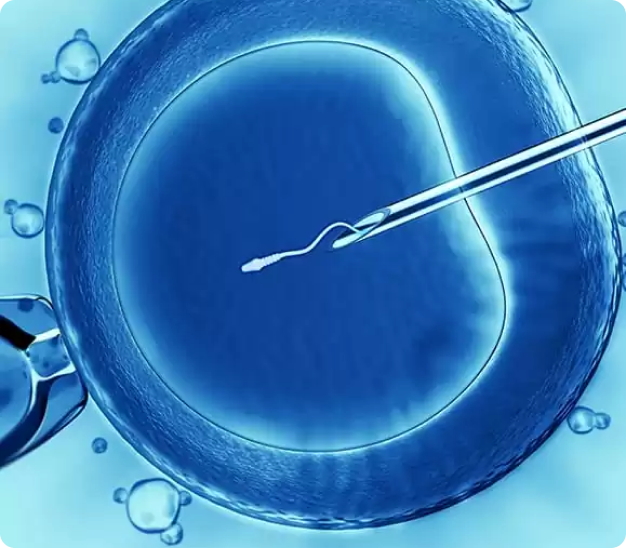
  • ICSI technique
  • Cryopreservation: Semen freezing and embryo freezing

Part 6 – Ethical Principles in ART:Part 6 – Ethical Principles in ART:

  • ART Act and Surrogacy Act

After Completion

On completing the course, the reproductive medicine specialist will be proficient in the following areas:On completing the course, the reproductive medicine specialist will be proficient in the following areas:

Minimally Invasive Surgery (Theory and Observation):Minimally Invasive Surgery (Theory and Observation):

  • Principles and practice of diagnostic and operative laparoscopy for infertility, such as adhesiolysis, cystectomy and endometriosis surgery
  • Principles and practice of diagnostic and operative hysteroscopy for infertility, such as removal of foreign bodies and polyps, biopsy, septal resection, adhesiolysis and ostial cannulation

Reproductive Endocrinology, Including Laboratory Techniques:Reproductive Endocrinology, Including Laboratory Techniques:

  • Expertise in the use of ovulation-inducing agents and the hormonal control of the menstrual cycle
  • Follicular recruitment and oocyte retrieval procedures
  • Understanding and managing OHSS
  • Transvaginal ultrasonography, with particular reference to follicular monitoring
  • Luteal phase support

Andrology:Andrology:

  • Use, maintenance and troubleshooting of andrology laboratory equipment

Laboratory Technology:Laboratory Technology:

  • Familiarity with laboratory equipment and its maintenance
  • Quality control (QC) and quality assurance (QA) in the laboratory
  • Detailed knowledge of ART procedures such as semen preparation, oocyte identification and grading, embryo grading, micromanipulation and cell culture

Log Book:Log Book:

  • A log book is maintained to ensure practical exposure.

Suggested Minimal Requirements

Minimally Invasive Surgery – Observe:Minimally Invasive Surgery – Observe:

  • 10 diagnostic laparoscopies
  • 5 operative laparoscopies

Minimally Invasive Surgery – Assist:Minimally Invasive Surgery – Assist:

  • 5 diagnostic laparoscopies
  • 3 operative laparoscopies

Andrology:Andrology:

  • Observe: 5 PESA, TESA or TESE procedures
  • Assist: 2 PESA, TESA or TESE procedures

IVF:IVF:

  • Observe: 25 oocyte retrievals
  • Assist: 10 oocyte retrievals
  • Perform: 5 oocyte retrievals

Laboratory:Laboratory:

  • Observe: 15 semen analyses and 10 sperm preparations
  • Perform: 10 semen analyses and 2 sperm wash procedures
  • Follow up: 5 IVF/ICSI cases from patient preparation to embryo transfer (with written records)

Counselling Sessions

Observe 30 patients from the initial visit and treatment planning up to oocyte pick-up (OPU).Observe 30 patients from the initial visit and treatment planning up to oocyte pick-up (OPU).

Observe 30 patients from embryo transfer planning up to embryo transfer.Observe 30 patients from embryo transfer planning up to embryo transfer.

Topics covered:Topics covered:

  • Reproductive anatomy and physiology of the male and female
  • Reproductive endocrinology
  • Gametogenesis
  • Fertilisation in vivo
  • Implantation and early embryogenesis
  • Pathology of infertility: ovarian, tubal, uterine and male factors, and conditions that reduce fertility such as PCOS, endometriosis, fibroids, adenomyosis and uterine anomalies
  • Approach to investigating and diagnosing subfertility
  • Clinical decision-making and choice of treatment
  • Pharmacology: Effects of the drugs used, including the pharmacokinetics and pharmacodynamics of commonly used drugs
  • Complications of ART procedures
  • Ovulation induction in IUI and IVF cycles
  • Ultrasound and other imaging modalities in infertility (folliculometry only)
  • Fundamentals of surgical procedures such as laparoscopy, hysteroscopy and myomectomy (theory and observation)
  • Pre-conception evaluation and counselling
  • Administration: Setting up an ART unit, quality control and assurance, creating management protocols, and organising and coordinating clinical meetings
  • Counselling the infertile couple: implications, therapeutic, ethical and social aspects
  • Research and audit
  • Teaching

Clinical Embryology:Clinical Embryology:

  • Principles and practice of semen analysis and semen cryopreservation
  • Cytology of mammalian and human oocytes, to identify stages of oocyte maturation accurately
  • All aspects of embryology, including developmental aetiology
  • Cell biology techniques used in cell and tissue culture
  • Molecular biology and genetics of human reproduction
  • Micromanipulation of sperm and oocytes for ICSI, and single-cell embryo biopsy for pre-implantation genetic diagnosis
  • Principles and functioning of all laboratory equipment
  • In vitro fertilisation of oocytes after gamete processing
  • Principles and practice of embryo freezing

Components of the Fellowship

Ovulation Induction Protocols:Ovulation Induction Protocols:

Trainees work in the hospital's outpatient unit, sharing responsibility with the consultant for evaluating the infertile couple.Trainees work in the hospital's outpatient unit, sharing responsibility with the consultant for evaluating the infertile couple. They take part in decision-making based on the couple's needs, formulate a plan of action, and are involved in pre-procedure assessment, counselling, protocol selection, monitoring the patient's response and the early detection of side effects. The consultant guides each trainee in acquiring the cognitive and technical skills needed for the various diagnostic and therapeutic procedures.

Ultrasound and Other Imaging:Ultrasound and Other Imaging:

The trainee acquires special competence in ultrasound imaging for folliculometry during stimulation, and in basic transvaginal sonography (TVS).The trainee acquires special competence in ultrasound imaging for folliculometry during stimulation, and in basic transvaginal sonography (TVS).

  • Observe: SIS and HyCoSy (10 cases)

Clinical Embryology:Clinical Embryology:

  • 15 days of observation of OPU, ICSI, embryo transfer, fertilisation checks and embryo checks

Surgical Training:Surgical Training:

The trainee participates in pre-procedure assessment, observes surgical procedures and follows up patients after laparoscopy, hysteroscopy and laparotomy.The trainee participates in pre-procedure assessment, observes surgical procedures and follows up patients after laparoscopy, hysteroscopy and laparotomy.

Research and Audit:Research and Audit:

The research project must be approved and should demonstrate the basic principles of research.The research project must be approved and should demonstrate the basic principles of research. The trainee participates in the audit of ART procedures and gains knowledge of quality control and assurance.

  • 1 research paper to be completed and published

Specific Objectives of the Fellowship

The practice of reproductive medicine involves the following major subgroups of patients:The practice of reproductive medicine involves the following major subgroups of patients:

Infertile couples with female factor infertility:Infertile couples with female factor infertility:

  • Anovulation (WHO types 1, 2, 3 and 4)
  • Tubal factor, including tubal obstruction and hydrosalpinx
  • Uterine cavity abnormalities, both congenital and acquired (fibroids, adenomyoma, septum and uterine malformations)
  • Endometriosis
  • Endocrine abnormalities (hyperprolactinaemia, hyperandrogenism, etc.)
  • Recurrent pregnancy loss

Infertile couples with male factor infertility:Infertile couples with male factor infertility:

  • Obstructive azoospermia
  • Non-obstructive azoospermia
  • Other sperm abnormalities (OATS)
  • Endocrine abnormalities (hypogonadotropic hypogonadism)

Couples with decreased gamete reserve, to be offered a donor gamete or embryo programme.Couples with decreased gamete reserve, to be offered a donor gamete or embryo programme.

Evaluation of donors, with counselling on the ethical and legal issues.Evaluation of donors, with counselling on the ethical and legal issues.

Academic Activities

  • Regular academic sessions: 3 per week
  • Case discussions: 1 per week
  • Seminars: 1 per fortnight
  • Paper presentation at a conference: 1
  • Audits: 2
  • Projects and research (as co-author): 1
  • Conferences: 1
  • CMEs: 1

Reference Material and Examination

Textbooks:Textbooks:

  • Principles & Practice of Assisted Reproductive Technology – Kamini A. Rao
  • Textbook of Assisted Reproductive Techniques – David K. Gardner
  • Laboratory Manual in Assisted Reproductive Technology – Kamini A. Rao
  • Clinical Gynecologic Endocrinology and Infertility – Speroff

Journals:Journals:

  • Fertility and Sterility
  • Human Reproduction
  • Human Reproduction Update
  • Reproductive BioMedicine Online

Guidelines:Guidelines:

  • ESHRE
  • ASRM
  • Canadian guidelines

Examination:Examination:

  • Theory: 100 marks
  • Practical: 1 long case and 1 short case
  • Viva voce
Renew Healthcare

Talk to our team

For appointments, treatment planning, and patient guidance.