
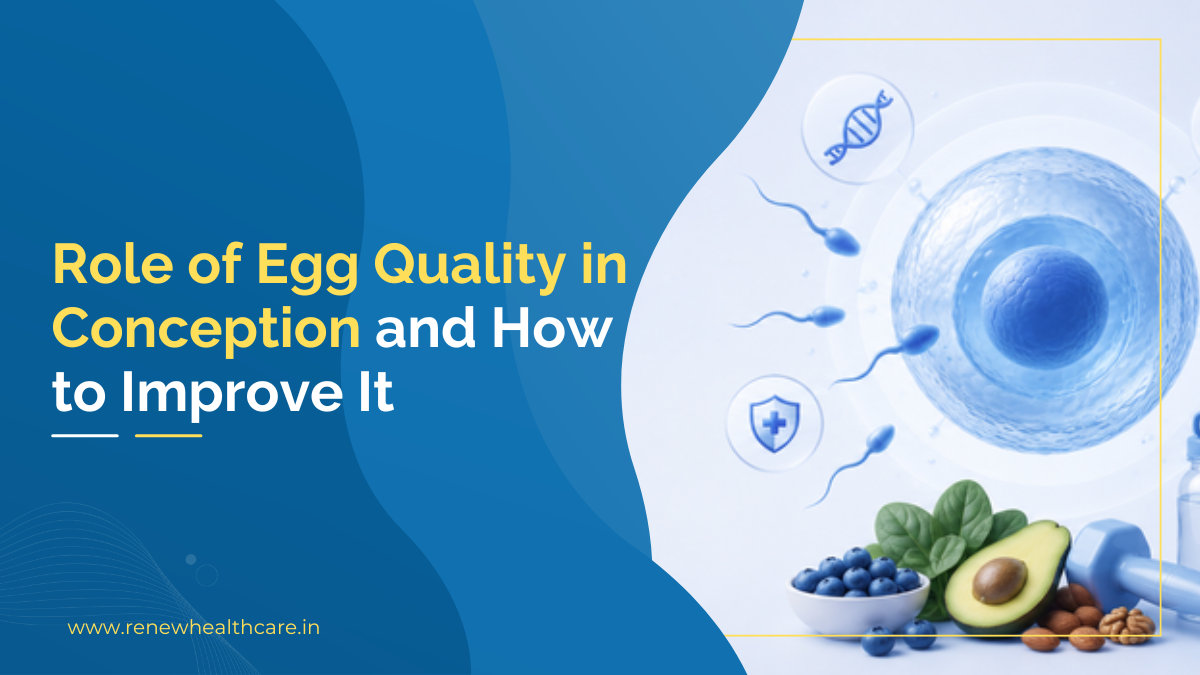
The quality of eggs in women of reproductive age is of paramount importance and is often ignored in general discussions about fertility. The quality of the eggs of a woman has a direct impact on her chances of conception, maintaining a healthy pregnancy, and achieving a healthy childbirth. The role of egg quality has significant implications for female fertility and can help women to take important steps towards improving their reproductive health.
← Back to all blogsHow Does Egg Quality Influence Fertility and Conception?
High-quality eggs undergo fertilization successfully and can develop into a healthy embryo. These have the right number of chromosomes and sufficient energy reserves for supporting the early development of the fetus. Eggs of poor quality may have chromosomal abnormalities, which can lead to chromosomally abnormal offspring, early miscarriage, or inability to fertilize properly. The quality of eggs plays an important role in the success of conception, whether naturally or through assisted reproductive technologies (IVF). The quality of the egg impacts the likelihood of a successful pregnancy, aside from the ovarian reserve. Even a high egg count does not ensure a successful pregnancy, as the eggs may be of poor quality. The quality of eggs can mainly impact fertility by affecting the natural ability of the embryo to develop normally. In poor-quality eggs, the embryo may not be able to grow after the initial stages. Even in the case of fertilization, such eggs may not ensure proper cellular division and development. Thus, even before implantation can happen, the process can get stopped. Due to this reason, women with poor-quality eggs often face problems in natural as well as in assisted conception.Can Lifestyle Changes Improve Egg Quality?
Yes, changes in lifestyle can have a significant positive effect on the quality of eggs. While egg quality may not be restored once it declines significantly, women can support their overall reproductive health with healthier habits. Additionally, they might enhance the quality of the remaining eggs. This can be done with proper nutrition. Women can protect eggs from oxidative stress when they stick to a diet high in vitamins like D and folate, lean proteins, healthy fats, antioxidants,, and omega-3 fatty acids. With regular workouts and an active lifestyle, they can also maintain a healthy body weight. It is also essential for them to manage stress properly. This is because chronic stress has a negative impact on both menstrual regularity and hormone levels. It can impact their egg development indirectly. Women can also protect their egg quality by avoiding smoking, abstaining from excessive alcohol consumption, and reducing their exposure to pesticides and other environmental toxins. Smoking has a high correlation with early ovarian aging and DNA damage. With a better lifestyle and good habits, females can support their cellular health, maintain a proper hormonal balance, and improve their egg quality by creating a conducive environment within their body.Can Medical Interventions Assess and Improve Egg Quality?
Women can actively support fertility specialists in evaluating the health and viability of their eggs.- Testing anti-Müllerian hormone (AMH) levels,
- Antral follicle count (AFC) tests, and
- Testing of follicle-stimulating hormone (FSH) levels, LH, E2, PH Levels.