Even if you are not trying to conceive, your uterus is preparing itself for pregnancy every month.
During that preparation, the endometrium thickens, builds up, and if there is no pregnancy, it is shed every month.
No matter if you are trying to conceive, have irregular bleeding, or just want to know more about your reproductive health, you have come to the right place.
What is Endometrium?
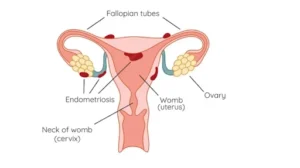
The endometrium is the inner lining of your uterus. Under the influence of hormones like oestrogen and progesterone, this lining thickens every month. If a fertilised egg arrives, it implants here and a pregnancy begins. If not, the lining sheds.
This lining has two layers:
- Functional layer - The part that builds up and sheds every cycle.
- Basal layer - It stays put and regenerates the functional layer each month.
What is Endometrial Thickness and What is Endometrium Normal Size in mm?
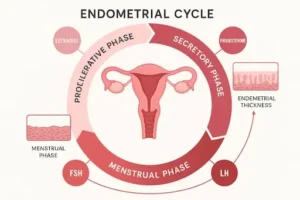
Endometrial thickness refers to how thick the uterine lining is at any given point in your menstrual cycle. It is measured in millimetres (mm). The number changes depending on which phase of the cycle you're in.
| Phase |
Timing |
Normal Endometrial Thickness |
| Menstruation |
Days 1–5 |
2–4 mm |
| Early Proliferative |
Days 5–7 |
5–7 mm |
| Late Proliferative |
Days 8–14 |
10–16 mm |
| Secretory / Ovulation |
Days 14–28 |
Up to 18 mm |
| Postmenopausal |
N/A |
Less than 5 mm |
If you're undergoing treatment at an
IVF centre in Kolkata, your doctor will monitor your endometrial thickness at every stage of the cycle. It is one of the most important indicators that determines when your body is ready.
What Are the Reasons for Endometrial Thickening?
The endometrial lining naturally thickens during the menstrual cycle. But sometimes, it thickens more than it should.
Here are the main uterus wall thickening causes:
- Pregnancy
Pregnancy is one of the most common reasons for endometrial thickening.
- Hormonal Imbalance
When oestrogen levels are high and progesterone is low, the endometrium can thicken excessively.
Women with PCOS often experience irregular ovulation and prolonged oestrogen exposure, which can lead to endometrial thickening over time.
- Endometrial Hyperplasia
Endometrial hyperplasia is a condition in which the uterine lining becomes too thick. It carries a risk of developing into endometrial cancer if left untreated. It is most common in women approaching menopause or those with hormonal imbalances.
- Endometrial Polyps
Endometrial polyps are small, soft growths that develop from the inner lining of the uterus. They can cause irregular bleeding and may affect fertility.
- Medications and Other Causes
Certain medications, including tamoxifen (used in breast cancer treatment), can cause endometrial thickening as a side effect. Other factors include:
- Obesity
- Diabetes
- Persistent high blood pressure
- Hormone replacement therapy (HRT)
- Cancer
In some cases, abnormal thickening may indicate endometrial or ovarian cancer.
If you are experiencing menstrual disorders such as heavy or irregular bleeding, consider seeking
menstrual disorders care in Kolkata at the earliest.
Medical and Natural Ways to Improve Endometrial Lining
The treatment for a thick uterine lining depends on the underlying cause and your age.
1. Progestin therapy
Progestin is a synthetic form of progesterone. It helps counteract excess oestrogen and can reduce endometrial thickening.
2. Hysterectomy
In severe or high-risk cases, surgical removal of the uterus may be recommended.
3. Removal of polyps
Endometrial polyps are usually removed through a minimally invasive procedure called hysteroscopy.
Treating a Thin Endometrium
For women with a thin lining, treatment aims to improve blood flow and thicken the uterine lining.
1. Oestrogen therapy
Oestrogen supplements (oral, patches, or vaginal) are the most common medical approach.
2. Medications to improve blood flow.
3. Platelet-rich plasma (PRP)
This treatment involves injecting platelet-rich plasma into the uterine cavity to stimulate lining regeneration.
Natural Ways to Support Endometrial Health
Certain lifestyle adjustments may help support a healthy uterine lining:
- Good Diet
- Exercise
- Stress Management
- Avoid smoking
Natural approaches work best as a complement to medical care and not as a replacement.
When to Seek Medical Advice?
When we talk about uterus wall thickening causes, you should speak to a doctor if you notice:
- Heavy menstrual bleeding
- Spotting between periods
- Bleeding after menopause
- Cycles shorter than 21 days or longer than 38 days
- Pelvic pain
- Difficulty conceiving
- Recurrent miscarriages
- Unexplained bloating or fullness
Conclusion
When you understand “
what is endometrial thickness?”, it can help you better understand your reproductive health, menstrual cycle, and fertility journey.
The good news is that many endometrial conditions can be managed successfully with timely diagnosis, lifestyle tweaks, and appropriate medical treatment.
Renew Healthcare is a name to reckon with when it comes to receiving the right care at the right time!

FAQs
1. What is normal thickness for endometrial lining?
During menstruation, it measures 2-4 mm. In the early proliferative phase, it rises to 5-7 mm. By the late proliferative phase (around ovulation), it reaches 10-16 mm. During the secretory phase, it peaks at up to 18 mm. In postmenopausal women, a normal thickness is less than 5 mm.
2. What are the main causes of a thin or thickened endometrium?
A thickened endometrium is most commonly caused by hormonal imbalances, endometrial hyperplasia, polyps, pregnancy, PCOS, or in rare cases cancer. A thin endometrium (7 mm or less) is often linked to low oestrogen levels, poor uterine blood flow, or prior uterine surgery or scarring.
3. How does endometrial thickness affect pregnancy and implantation?
The endometrial thickness of 8-15 mm is considered optimal for pregnancy. If the lining is too thin (below 7 mm), implantation rates drop. An abnormally thick lining may also disrupt implantation if it is caused by an underlying condition. Women trying to conceive with a thin uterine lining may also be advised to explore the best
IUI treatment in Kolkata if implantation challenges persist.
4. How is endometrial thickness measured?
The most preferred method is transvaginal ultrasound, where a small ultrasound probe is gently inserted into the vagina. It gives a clear, close-up view of the uterus and allows the doctor to measure the endometrial thickness in millimetres.
Popular Searches
Surrogacy Centre in Kolkata |
Menopause Treatment in Kolkata |
PCOS Treatment in Kolkata |
Egg Freezing Centre in Kolkata
Popular Blogs
Sperm Life Span In Female Body |
Foods To Avoid After Embryo Transfer |
Intralipid Infusion Uses |
Why Iui Fails: Reasons Explained |
How To Fix Low Sperm Count