
In Brief
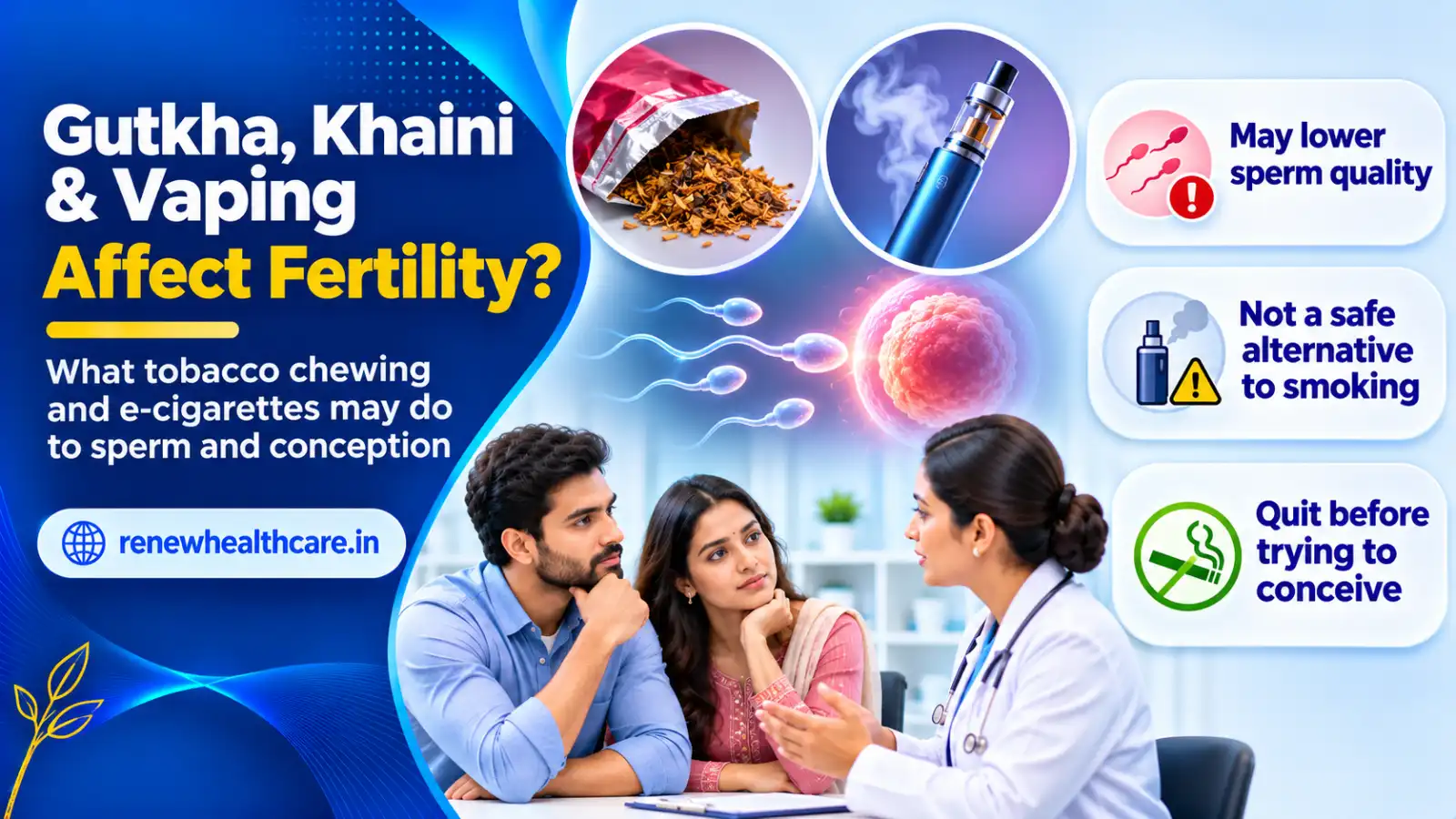
Yes, gutkha, khaini and vaping are likely to affect fertility. A study of Indian men undergoing infertility evaluations found that the more frequently men chewed tobacco, the poorer their sperm quality. Evidence regarding vaping comes mainly from animal studies but also points towards potential reproductive harm.
Neither chewing tobacco nor vaping should be considered a safe alternative to smoking when trying to conceive.
How Does Chewing Tobacco Affect Fertility?
Ask a man during a fertility consultation whether he smokes, and he may say no, even if he chews gutkha, khaini or zarda every day.
In India, chewing tobacco is more common than smoking. Smokeless tobacco contains nicotine and many of the same harmful substances found in cigarettes. These substances can also reach developing sperm and potentially affect reproductive health.
Not smoking cigarettes does not necessarily mean that a person is free from tobacco-related fertility risks.
Understanding how lifestyle habits influence male fertility is important for couples planning a pregnancy.
The Evidence on Chewed Tobacco and Sperm Quality
A study involving 638 Indian men undergoing infertility evaluations compared individuals with light, moderate and heavy tobacco-chewing habits.
Men who chewed tobacco more frequently had poorer semen parameters, including:
Lower sperm count: A reduced number of sperm in the semen.
Reduced sperm motility: Reduced ability of sperm to move effectively.
Poorer sperm morphology: A lower proportion of normally shaped sperm.
The absence of sperm in semen, known as azoospermia, was also more common among heavier tobacco users, although this finding was not statistically significant.
The researchers recommended counselling men undergoing infertility evaluations about the potential effects of tobacco chewing on reproductive health.
Evidence grade: Weak. The study was retrospective and did not include a comparison group of individuals who did not consume tobacco.
Cigarette smoking has been studied more extensively. A large meta-analysis found that smokers had an average reduction in sperm concentration of approximately 9.7 million sperm per millilitre.
Smokeless tobacco may affect reproductive health through similar biological pathways.
Read more about how smoking and alcohol affect sperm quality.
Does Vaping Affect Fertility?
Vaping and electronic cigarettes are often presented as less harmful alternatives to conventional cigarettes. However, being potentially less harmful does not mean they are safe when trying to conceive.
Current research raises concerns about the potential effects of e-cigarettes on reproductive health, although human fertility studies remain limited.
| Area of Concern | What Current Research Suggests |
|---|---|
| Sperm count and motility | Animal studies have reported reductions in sperm count and motility. |
| Sperm production | Animal studies suggest potential damage to sperm-producing tissues. |
| Egg health | Some animal studies suggest adverse effects on eggs. |
| Implantation and embryo development | Animal research indicates potential harmful effects. |
| Nicotine-free vaping | Certain flavouring substances may be harmful even without nicotine. |
| Human fertility | Available human research remains very limited. |
Vaping should not be considered a safe substitute for cigarette smoking when planning a pregnancy.
Evidence grade: Weak. Most of the available evidence comes from animal studies, and further human research is required.
Can Gutkha, Khaini and Vaping Affect Female Fertility?
Tobacco exposure is not only a concern for male reproductive health. Women planning a pregnancy should also consider the potential risks associated with tobacco and nicotine consumption.
Chewed tobacco and nicotine exposure during pregnancy have been associated with poorer pregnancy and infant health outcomes.
Women trying to conceive should avoid all forms of tobacco, including:
Gutkha
Khaini
Zarda
Tobacco-containing paan
Mishri
Gul used on the teeth
Both partners should discuss their tobacco and nicotine use with their fertility specialist when planning a pregnancy.
Pre-conception counselling can help couples understand relevant lifestyle factors and prepare for pregnancy.
How Long Does Sperm Quality Take to Improve After Quitting Tobacco?
Sperm development takes approximately two to two and a half months.
Because sperm production is a continuous biological process, improvements following tobacco cessation may not be immediately noticeable.
A repeat semen analysis approximately three months after quitting tobacco can help assess whether sperm parameters have improved.
However, the degree of improvement varies between individuals. Quitting tobacco does not guarantee that sperm count or quality will return to normal, particularly if other underlying fertility problems are present.
Alongside tobacco cessation, maintaining a balanced diet can help support general reproductive health.
Read our detailed guide on foods that may help improve sperm count and quality.
Practical Advice for Quitting Tobacco and Vaping
Quitting tobacco can be challenging, but appropriate medical guidance and professional support can help.
Be Honest With Your Doctor
Explain exactly which tobacco products you use and how frequently you use them. This information helps your doctor provide appropriate advice without judgement.
Discuss Nicotine Replacement Therapy
Nicotine replacement products and counselling can help many individuals quit tobacco. Ask your doctor which options are appropriate for you, particularly when planning a pregnancy.
Seek Professional Counselling
India's National Tobacco Quitline provides free tobacco cessation support and counselling. The toll-free number is also printed on tobacco product packaging in India.
National Tobacco Quitline: 1800-11-2356 (Toll-free).
For further information, visit the National Tobacco Control Programme.
When Tobacco Is Not the Main Cause of Infertility
Tobacco consumption is only one of several possible factors affecting fertility.
If neither partner has ever consumed tobacco or used nicotine products, tobacco-related fertility problems may not be relevant to their situation.
Other potential causes of infertility should be investigated through appropriate medical evaluation.
Learn more about male infertility and fertility evaluation at Renew Healthcare.
Frequently Asked Questions (FAQs)
1. Is chewing tobacco less harmful than smoking for sperm?
There is no evidence that chewing tobacco is safer than smoking for fertility. Both expose developing sperm to nicotine and potentially harmful substances.
2. Do nicotine patches harm sperm?
Nicotine patches deliver nicotine without exposing the body to smoke or many of the other harmful substances found in tobacco products.
They are commonly used to support tobacco cessation. However, individuals planning a pregnancy should discuss short-term nicotine replacement therapy with their doctor.
3. Will my sperm count improve if I stop chewing tobacco?
Many men may experience improvements in sperm quality after quitting tobacco, but improvement is not guaranteed.
A repeat semen analysis approximately three months after quitting can help determine whether sperm count, motility or morphology have improved in your individual case.
4. Is occasional paan with tobacco a problem when trying to conceive?
Regular tobacco consumption, including tobacco-containing paan, may affect reproductive health.
The safest choice when trying to conceive is to avoid tobacco altogether.
The Bottom Line
Gutkha, khaini and vaping are not harmless substitutes for cigarette smoking.
Available research suggests that chewing tobacco may negatively affect sperm quality, while animal studies raise concerns about the potential effects of vaping on reproductive health.
Although further human research is needed, both partners planning a pregnancy should aim to stop all forms of tobacco and recreational nicotine use, with appropriate medical guidance and cessation support.
References
Said TM, Ranga G, Agarwal A. Relationship between semen quality and tobacco chewing in men undergoing infertility evaluation. Fertility and Sterility. 2005;84(3):649–653.
Sharma R, Harlev A, Agarwal A, Esteves SC. Cigarette smoking and semen quality: A new meta-analysis examining the effect of the 2010 World Health Organization laboratory methods for the examination of human semen. European Urology. 2016;70(4):635–645.
An Overview of E-Cigarette Impact on Reproductive Health. Life (Basel). 2023;13(3):827. Read the study.
Discussing Your Fertility Concerns With a Specialist
Dr. Neha Yadav is an Obstetrician, Gynaecologist and Infertility Specialist at Renew Healthcare, Kolkata.
Individuals and couples with concerns about tobacco consumption, sperm quality, reproductive health and pregnancy planning can discuss their individual circumstances with her.
Doctor: Dr. Neha Yadav
Clinic: Renew Healthcare
Location: Salt Lake, Kolkata
Website: renewhealthcare.in
Medical Disclaimer
This article is intended for general educational purposes and does not replace individual medical advice, diagnosis or treatment. Please consult a qualified healthcare professional regarding your specific fertility concerns and medical circumstances.