
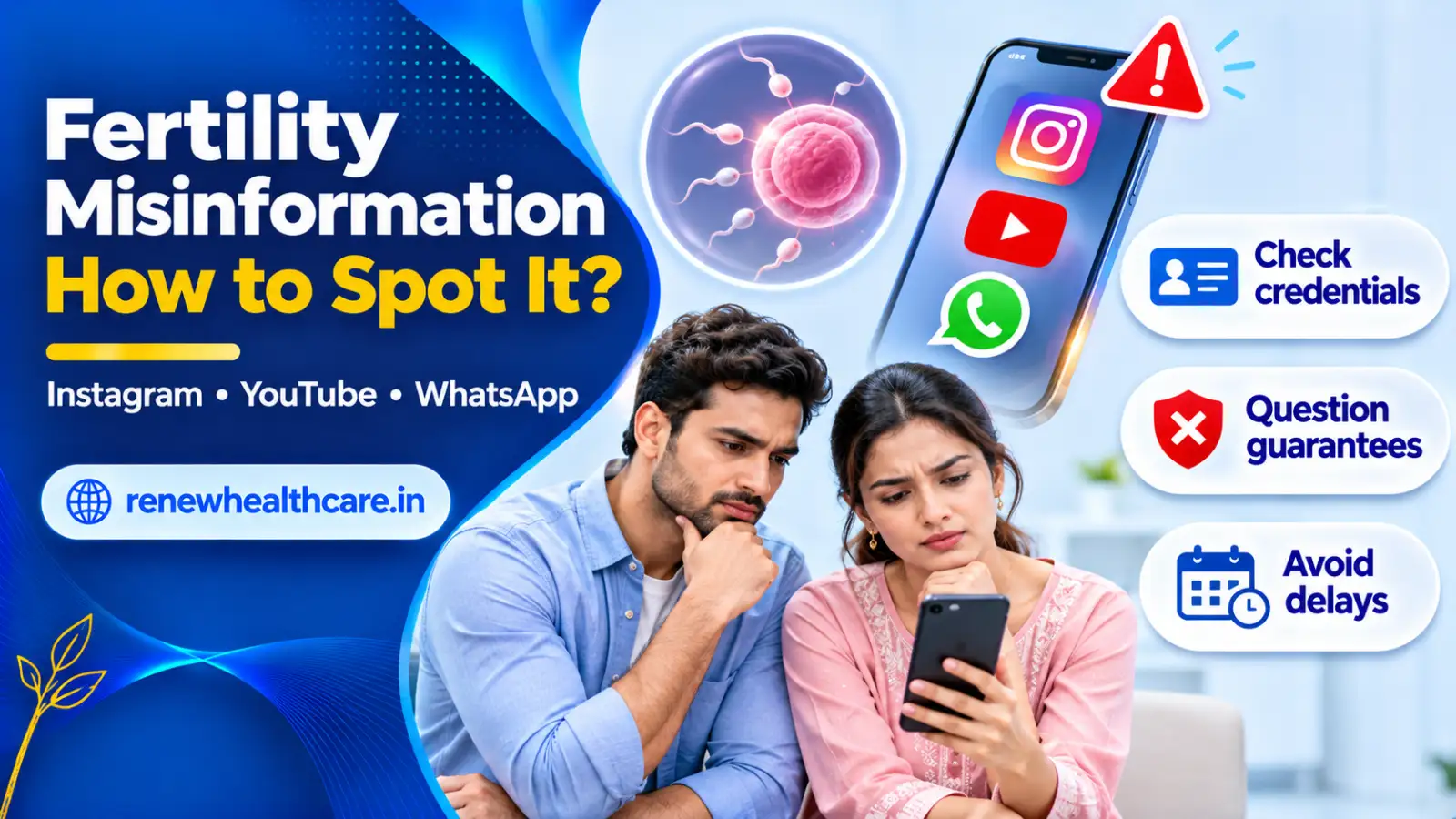
When viewing fertility-related content on social media, check who is speaking, what outcomes are being promised and whether the advice could delay appropriate medical testing.
A study presented at the 2026 American Society for Reproductive Medicine (ASRM) Scientific Congress found misinformation in 37% of the popular fertility-related TikTok videos studied. Misinformation was more common among non-clinical content creators, and some of the more serious inaccuracies could potentially delay fertility evaluation and appropriate treatment.
Understanding Fertility Misinformation on Social Media
You watch an Instagram reel promoting a herbal powder that supposedly opens blocked fallopian tubes, a YouTube video promising guaranteed pregnancy through a particular PCOS diet, or a WhatsApp message claiming that babies born through IVF are unhealthy.
Such information is frequently shared among friends, family members and online communities. However, a popular video or widely forwarded message does not necessarily contain medically accurate information.
For individuals and couples trying to conceive, distinguishing between evidence-based fertility advice and misleading claims is particularly important.
What the 2026 Research Found
Researchers presented a study at the 2026 American Society for Reproductive Medicine Scientific Congress examining popular fertility-related videos on TikTok.
The findings included:
Misinformation was identified in 37% of the videos studied.
Unproven fertility interventions were the most common subject of misleading claims.
Misinformation appeared more frequently in content created by non-clinical individuals.
Some of the more serious inaccuracies encouraged behaviours that could delay appropriate fertility evaluation or evidence-based treatment.
Evidence grade: Low to moderate. The findings are based on a content analysis presented as a conference abstract rather than a complete peer-reviewed research paper.
The potential harm of fertility misinformation is not limited to false hope. It may also lead to lost time, particularly for women aged 35 and above.
Five Questions to Ask Before Trusting Fertility Advice Online
Before following fertility advice on Instagram, YouTube or WhatsApp, consider these five questions.
1. Who Is Providing the Information?
Check whether the person sharing the information is a qualified healthcare professional with relevant experience.
Warning signs include missing professional qualifications, an undisclosed identity or the absence of a medical registration number.
A large social media following does not establish medical expertise.
2. What Is Being Promised?
Be cautious of content that promises guaranteed pregnancy, 100% success, miracle treatments or natural cures for infertility.
Fertility treatment outcomes depend on individual medical circumstances. No treatment can guarantee pregnancy or childbirth.
3. What Outcome Is Being Discussed?
Some fertility-related content focuses on changes in hormone levels, detoxification or other intermediate outcomes without demonstrating improvements in pregnancy or live birth rates.
An improvement in an individual health measurement does not necessarily mean that the chances of having a baby have improved.
4. Is Something Being Sold?
Look for commercial interests behind the information, including product links, discount codes, supplements and requests to send private messages for treatment details.
A financial interest may influence how information is presented.
5. Could the Advice Delay Fertility Testing?
Be particularly cautious of recommendations that encourage couples to spend several months or a year trying unproven remedies before consulting a healthcare professional.
Delaying appropriate evaluation may reduce available treatment options in certain circumstances.
India's Guidelines on Ethical Medical Advertising
On 6 October 2026, the National Medical Commission (NMC) issued guidelines on ethical advertising and public communication by hospitals, medical institutions and registered medical practitioners.
These guidelines aim to protect patients from misleading medical claims and encourage responsible healthcare communication.
The guidelines address several practices, including:
Promotional claims involving treatment success rates.
Misleading patient testimonials and endorsements.
Guaranteed treatment outcomes.
Promotional discounts and commercial solicitation.
Unsubstantiated or exaggerated medical claims.
Disclosure of doctors' names, qualifications and medical registration numbers in electronic media posts.
Appropriate disclosure of AI-generated or materially AI-altered promotional content where its artificial nature is relevant to the audience.
If a fertility clinic's social media content contains misleading promotional claims or appears inconsistent with these guidelines, its other medical claims should also be evaluated carefully.
Read more about how to identify red flags when choosing an IVF clinic.
Common Fertility Myths Circulating on Social Media
Myth 1: Natural Remedies Can Unblock Fallopian Tubes
There is no established scientific evidence demonstrating that herbal powders, supplements or natural remedies can reliably open blocked fallopian tubes.
Tubal blockage requires appropriate medical evaluation to determine its cause and identify suitable treatment options.
Myth 2: IVF Babies Are Weak or Unhealthy
Most children born following IVF are healthy.
As with other pregnancies, certain medical risks may exist. These include risks associated with multiple pregnancies, which should be discussed openly with a fertility specialist.
Read more about common myths and misconceptions about IVF fertility.
Myth 3: Women With PCOS Can Never Conceive
Polycystic ovary syndrome (PCOS) can affect ovulation and make conception more challenging for some women.
However, having PCOS does not mean that pregnancy is impossible. Many women with PCOS conceive naturally or with appropriate ovulation treatment.
Learn more about PCOS management and treatment.
When Should You Stop Searching Online and Consider Fertility Testing?
Social media can provide general educational information, but it cannot replace an individual medical assessment.
The appropriate time to consider fertility evaluation generally depends on age, medical history and how long a couple has been trying to conceive.
| Age or Medical Circumstance | When to Consider Fertility Evaluation |
|---|---|
| Women under 35 years | After 12 months of trying to conceive |
| Women aged 35 years and above | After 6 months of trying to conceive |
| Irregular menstrual cycles | Earlier medical evaluation |
| Known endometriosis | Earlier medical evaluation |
| Previous semen abnormalities | Earlier medical evaluation |
Both partners should be evaluated because fertility difficulties may involve male factors, female factors or a combination of both.
Explore more information about female infertility and male infertility.
Frequently Asked Questions (FAQs)
1. Are Doctors on Social Media Always Reliable?
Not necessarily. Even when information is presented by a healthcare professional, it is important to check their medical registration, relevant qualifications and whether their claims are supported by scientific evidence.
Be cautious when medical advice is closely associated with selling a product or promising specific treatment outcomes.
2. Is It Safe to Try a Natural Remedy While Waiting for Fertility Treatment?
Some remedies may be harmless, while others may have side effects or interact with medications.
The main concern is allowing an unproven remedy to delay appropriate fertility testing or replace recommended medical care.
Discuss any supplements, herbal products or remedies with your healthcare professional before using them.
3. How Can I Check a Doctor's Medical Registration?
A registered medical practitioner's registration number should be available in their professional information.
You can verify the doctor's registration through the National Medical Register or the relevant state medical council.
Visit the National Medical Commission website for further information.
4. What Should I Bring to My Fertility Appointment?
If you have encountered fertility-related claims that concern you, bring screenshots, videos or links to your appointment.
Your fertility specialist can help you understand whether the information is supported by scientific evidence and whether it applies to your individual circumstances.
You can also read our guide on questions to ask your IVF doctor before starting treatment.
The Bottom Line
Fertility-related misinformation on Instagram, YouTube and WhatsApp can create confusion, unrealistic expectations and unnecessary delays in seeking appropriate medical care.
Before trusting online fertility advice, check who is providing the information, what outcomes are being promised, whether scientific evidence supports the claims and whether a product or service is being sold.
Use social media content as a starting point for questions to discuss with your fertility specialist rather than as a substitute for medical advice.
References
Tyle M, et al. Clinical Misinformation and Care-Delay Framing in Fertility-Related Content on TikTok: A Content Analysis. Abstract presented at the American Society for Reproductive Medicine 2026 Scientific Congress & Expo, Baltimore, Maryland.
Read the ASRM research announcement.
National Medical Commission, Ethics and Medical Registration Board. Guidelines on Ethical Advertising and Public Communication by Hospitals/Medical Institutions and Registered Medical Practitioners. Public Notice R-13014/01/2024-Ethics, dated 6 October 2026.
Discussing Your Fertility Concerns With a Specialist
Dr. Neha Yadav is an Obstetrician, Gynaecologist, Infertility Specialist and Associate Consultant at Renew Healthcare, Kolkata.
Her clinical interests include infertility care, patient counselling and high-risk pregnancies. Individuals and couples who have questions about fertility myths, reproductive health, diagnostic testing or treatment options can discuss their individual circumstances with her.
Doctor: Dr. Neha Yadav
Designation: Associate Consultant and Infertility Specialist
Medical Registration Number: WBMC 85882
Clinic: Renew Healthcare
Consultation Days: Monday to Saturday
Clinic Address: CB 69, CB Block, Sector 1, Bidhannagar, Kolkata – 700064.
Consultation Enquiries: +91 62923 12076
Consultation Fee: Contact the clinic for details.
Website: renewhealthcare.in
Medical Disclaimer
This article is intended for general educational purposes and does not replace individual medical advice, diagnosis or treatment. Please consult a qualified healthcare professional regarding your specific fertility concerns and medical circumstances.