
Medically reviewed by Dr. Neha Yadav
Testosterone injections and anabolic steroids can significantly reduce sperm production and, in some men, cause the semen to contain no sperm at all. This can happen even when the medicines or substances are being used to improve energy, muscle growth or physical performance.
The encouraging news is that sperm production often recovers after stopping testosterone or anabolic steroids. However, recovery can take several months or longer, particularly after prolonged use. It is also important to understand that recovery is not guaranteed in every case.
If your semen analysis has shown a very low sperm count or azoospermia after testosterone or steroid use, understanding why this happens and what to expect next can help you plan the right evaluation.
Do Testosterone Injections Cause Infertility?
Yes. Testosterone taken from outside the body can suppress the hormonal signals that stimulate sperm production.
This includes testosterone given through injections, gels or other forms of testosterone replacement therapy (TRT). Although testosterone is important for male reproductive health, taking additional testosterone does not necessarily improve fertility. In fact, it can have the opposite effect.
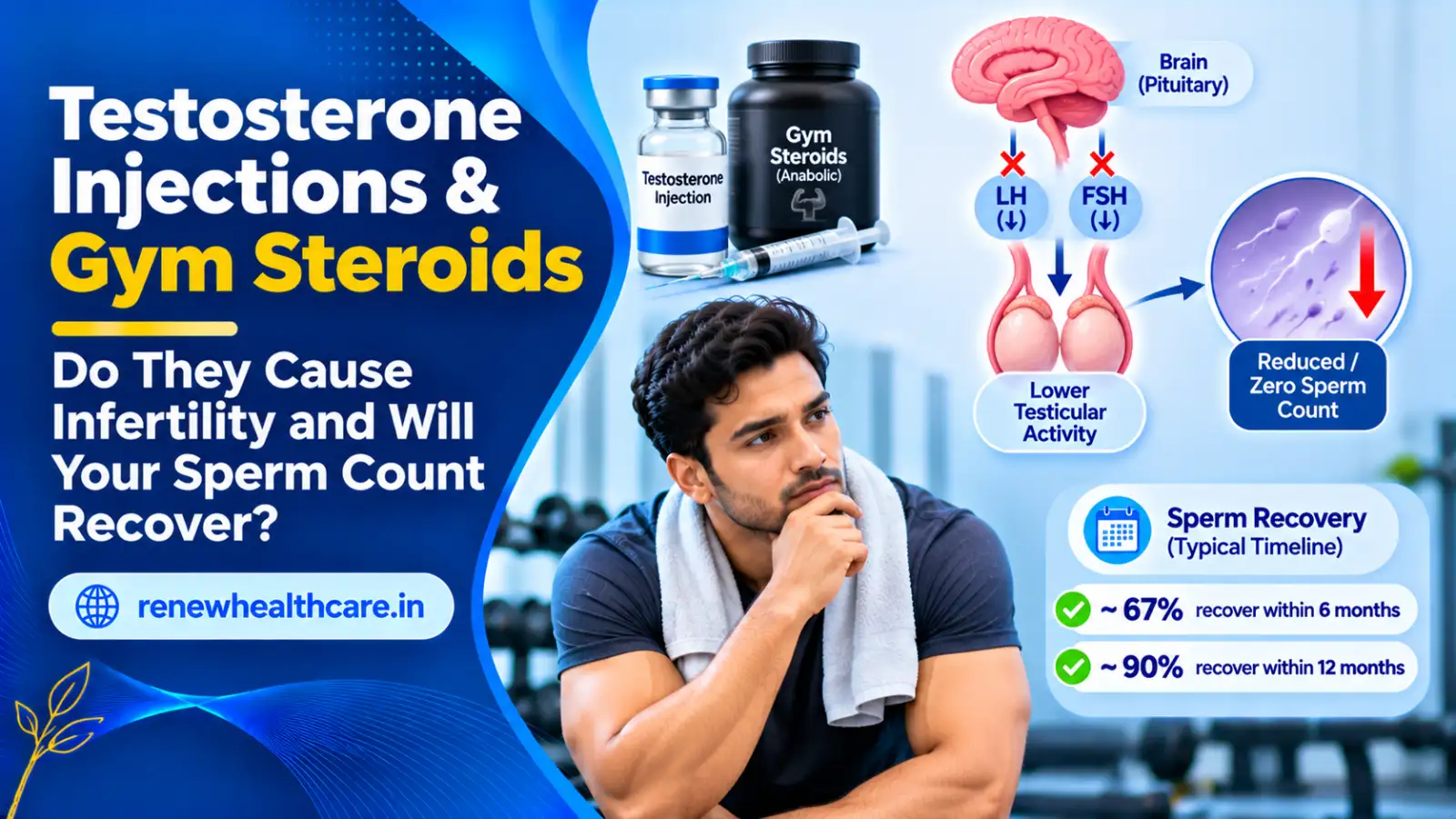
The brain may interpret the additional testosterone as a signal that the body has enough of the hormone. It then reduces the release of two important hormones:
Luteinising hormone (LH): Signals the testes to produce testosterone.
Follicle-stimulating hormone (FSH): Supports sperm production within the testes.
When LH and FSH levels fall, the testosterone concentration inside the testes can also decrease. This local testosterone supply is essential for normal sperm production.
As a result, sperm production may slow down significantly or stop temporarily. Some men develop a very low sperm count, while others develop azoospermia, which means no sperm are detected in the semen sample.
This is one reason testosterone therapy is generally not recommended for men who want to have children now or in the future.
How Are Testosterone and Sperm Production Connected?
Sperm production depends on communication between the brain and the testes. This is often described as the hypothalamic-pituitary-gonadal axis.
Under normal conditions, the pituitary gland releases LH and FSH. These hormones act on the testes and support the processes required for testosterone production and sperm development.
When testosterone is introduced from outside the body, the brain reduces these hormonal signals. With less LH and FSH stimulation, the normal environment needed for sperm production is disrupted.
This explains an important distinction: testosterone levels in the blood may be high while sperm production inside the testes is very low.
Therefore, a blood testosterone result alone cannot tell you whether sperm production is normal.
Do Gym Steroids Affect Sperm Count?
Yes. Anabolic-androgenic steroids used for muscle growth and physical performance can suppress the same hormonal pathway.
The effects are not limited to professional athletes or people who use steroids for several years. Even a cycle of anabolic steroids can affect sperm production.
In the HAARLEM study, which followed 100 amateur athletes using anabolic steroids, 77% of those tested had a total sperm count below 40 million during their steroid cycle. Three months after the cycle ended, the total sperm count was still substantially lower than before use. At one year after starting the cycle, 34% still had a total sperm count below 40 million.
These findings show why a short steroid cycle should not automatically be considered harmless for fertility.
The effects can vary depending on the substances used, duration of use, individual response and whether other fertility problems are present.
How Long Does It Take for Sperm Count to Recover After Stopping Testosterone?
Sperm recovery takes time. Stopping testosterone or anabolic steroids does not mean that sperm production returns to normal immediately.
One major analysis combined data from 30 hormonal male-contraception studies involving 1,549 healthy men. The participants received monitored androgen-based regimens and underwent regular semen testing.
The analysis found:
The median time to reach a sperm concentration of 20 million per mL was approximately 3.4 months.
Around 67% reached this level within six months.
Approximately 90% reached it within 12 months.
These figures provide useful information, but they came from supervised clinical studies involving healthy volunteers. They should not be treated as a guaranteed recovery timeline for men who have used gym steroids.
What About Recovery After Gym Steroids?
Recovery after anabolic steroid use can take longer, especially when use has continued for an extended period.
In the HAARLEM study, some participants continued to have reduced sperm counts one year after starting their steroid cycle.
Another study estimated that the average time for sperm output to recover after androgen abuse was approximately 14.1 months, with recovery taking longer in men who had used steroids for a longer period.
The important point is that recovery varies between individuals. Age, duration of use and the presence of other reproductive health concerns may influence the timeline.
Sperm production itself also takes time. A sperm cell requires roughly two to two and a half months to develop and reach the semen. This means semen results may take longer to improve even after the hormonal signals begin recovering.
Will Sperm Count Always Return to Normal After Stopping Steroids?
No. Recovery is common, but it cannot be guaranteed for every man.
Some men regain sperm production within six months, while others need a year or longer. A smaller group may continue to have very low sperm counts despite stopping testosterone or anabolic steroids.
For example, a fertility-clinic study involving men with previous anabolic steroid use found that some men who initially had azoospermia continued to have no detectable sperm after six months of treatment.
However, this does not establish that the condition is permanent. The study involved a selected group of men with a history of prolonged steroid use, and longer-term recovery may differ.
If sperm production does not recover as expected, a specialist may need to investigate whether another hormonal or testicular condition is also contributing to the problem.
You can also read our guide to understanding azoospermia, its causes and available treatments.
What Should You Do If Your Sperm Count Is Zero After Testosterone or Steroid Use?
A semen analysis showing zero sperm can be worrying, but it does not automatically mean that sperm production has been permanently lost.
The first step is to tell your doctor about your testosterone or steroid use. Be open about the type of substance, how long you used it and when you last took it.
A fertility specialist may recommend the following evaluation.
1. Semen Analysis
A semen analysis helps assess sperm concentration and other semen parameters.
If the result shows azoospermia, your doctor may recommend further evaluation and repeat testing according to your clinical situation.
A semen report should be interpreted alongside your medical history and hormone results. You can read more about how to understand a semen analysis report.
2. Hormone Testing
A morning hormone panel may include:
LH: Helps assess the hormonal signal responsible for stimulating testosterone production in the testes.
FSH: Provides information about the hormonal signal involved in sperm production.
Total testosterone: Measures the testosterone level in the blood.
Low LH and FSH alongside a low sperm count may indicate suppression caused by external testosterone or anabolic steroids. Your specialist will interpret these results in the context of your history and examination.
3. Review of Your Medical and Steroid History
Your doctor may ask about:
The type of testosterone or anabolic steroid used.
How long you used it.
When you stopped taking it.
Whether you used multiple substances together.
Any previous semen analysis results.
Whether you have experienced fertility difficulties before.
This information helps distinguish drug-related hormonal suppression from other possible causes of male infertility.
Can Clomiphene or hCG Help Restore Sperm Production?
In selected men, a fertility specialist may consider prescription treatments that stimulate the body's own hormonal signals rather than supplying testosterone from outside.
Two options discussed in male infertility care include clomiphene-type medicines and human chorionic gonadotrophin (hCG).
Clomiphene-type medicines work by influencing the hormonal feedback system and encouraging the pituitary gland to release more LH and FSH.
hCG acts similarly to LH and stimulates the testes to produce testosterone.
These treatments are not suitable for everyone and require medical supervision. The choice depends on hormone levels, fertility goals, medical history and the underlying cause of low sperm production.
Although some observational studies have reported improvements in sperm parameters with these treatments, it is not yet firmly established how much faster they restore sperm production compared with stopping the suppressing substance and allowing natural recovery.
Do not start these medicines without a specialist's assessment. The treatment plan should be based on your test results rather than a general steroid-recovery protocol.
Are Testosterone Boosters and Post-Cycle Therapy Kits Safe for Sperm Recovery?
Not necessarily.
Products marketed as testosterone boosters often make claims about improving testosterone levels, strength or muscle development. However, the evidence supporting many of these claims is limited.
A review of 50 testosterone-booster products found that although most claimed to increase testosterone, only around one in four had ingredients supported by published evidence showing an increase.
There are also concerns about undeclared substances in products sold as non-hormonal supplements. An older international analysis found that some supplements contained anabolic steroids that were not declared on their labels.
This is particularly concerning for someone trying to recover sperm production after steroid use. Taking an unverified product could expose the body to substances that continue to suppress the hormonal system.
Gym-sold post-cycle therapy kits should not be treated as a proven fertility treatment. Their contents and effectiveness may be uncertain.
The safer approach is to stop non-prescribed anabolic steroid use, undergo appropriate testing and discuss recovery with a qualified specialist.
When Should You See a Male Fertility Specialist?
You should consider specialist evaluation if:
Your semen analysis shows azoospermia or a very low sperm count.
Your sperm count remains very low after stopping testosterone or steroids.
You and your partner are planning pregnancy soon.
You have used testosterone or anabolic steroids for several years.
You have concerns about testicular size or hormonal symptoms.
You have previously had fertility problems.
If your partner is in her mid-thirties or older, or you are hoping to conceive soon, it may be particularly important not to delay an assessment while waiting for sperm production to recover.
Your specialist can help plan the timing of repeat semen analysis and hormone testing based on your individual circumstances.
What Should You Tell Your Doctor During the Consultation?
Being honest about testosterone or steroid use is important. Your doctor needs this information to interpret your semen analysis and hormone results correctly.
You can explain your situation using a simple statement:
"I used testosterone or anabolic steroids for approximately [number of months/years] and stopped on [date]. My semen analysis showed [result]. Can we plan an appropriate recovery timeline and discuss the tests I need?"
Also bring any previous semen analysis reports, hormone test results and details of the products you used, if available.
Frequently Asked Questions
1. Does Testosterone Cause Infertility in Men?
Testosterone taken from outside the body can suppress LH and FSH, the hormones that support sperm production. This may lead to a very low sperm count or azoospermia while using testosterone. Sperm production often recovers after stopping, but recovery takes time and is not guaranteed.
2. How Long After Stopping Steroids Does Sperm Return?
Recovery varies. In pooled supervised male-contraception trials, around two-thirds of men reached a sperm concentration of 20 million per mL within six months, and approximately 90% did so within a year. Men who use gym steroids, particularly for longer periods, may need more time.
3. Can I Take Testosterone Replacement Therapy and Still Have Children?
Exogenous testosterone is generally not recommended for men who want to have children now or in the future because it can suppress sperm production. Men with confirmed low testosterone may have other prescription options that support the body's own hormonal signals. Discuss these options with a specialist before starting or changing treatment.
4. What Are Clomiphene and hCG Used for in Male Infertility?
Clomiphene-type medicines encourage the pituitary gland to release more LH and FSH, while hCG acts like LH on the testes. A specialist may consider these treatments in selected men with testosterone-related suppression. They require monitoring, and the extent to which they speed recovery compared with waiting is not yet firmly established.
5. Will a Post-Cycle Therapy Kit from the Gym Restore My Sperm Count?
There is no reliable evidence that gym-sold post-cycle therapy kits can safely restore sperm production. Their ingredients may be uncertain, and some supplements marketed as non-hormonal have been found to contain undeclared anabolic steroids. Medical evaluation is a safer approach.
6. Does a Zero Sperm Count After Steroid Use Mean Permanent Infertility?
Not necessarily. Testosterone and anabolic steroids can temporarily suppress sperm production, and many men recover after stopping. However, recovery may take a year or longer, and it is not guaranteed. A fertility specialist can assess hormone levels, semen results and other possible causes.
Conclusion
Testosterone injections and anabolic steroids can significantly affect male fertility by suppressing the hormonal signals that support sperm production. This can result in a very low sperm count or even azoospermia.
Many men recover sperm production after stopping these substances, but the timeline varies. Recovery may take six to twelve months or longer, particularly after prolonged anabolic steroid use.
If testosterone was prescribed, discuss any change or withdrawal with the prescribing doctor rather than stopping treatment without a plan. If steroids were obtained from a gym or another non-medical source, stop using them and seek appropriate medical evaluation.
A semen analysis and hormone assessment can help establish where things stand and guide the next steps. Most importantly, do not assume that a zero sperm count means permanent infertility, but do not rely on unverified recovery products either.
Medical Review: Dr. Neha Yadav — View Doctor Profile
This article is for general educational purposes and does not replace individual medical advice. Please consult a qualified specialist about your own situation.