
Medically reviewed by Dr. Arnab Kundu
Experiencing two or more pregnancy losses can raise difficult questions. You may wonder why it happened, whether something was missed during earlier tests, and what can be done to improve the chances of a successful pregnancy next time.
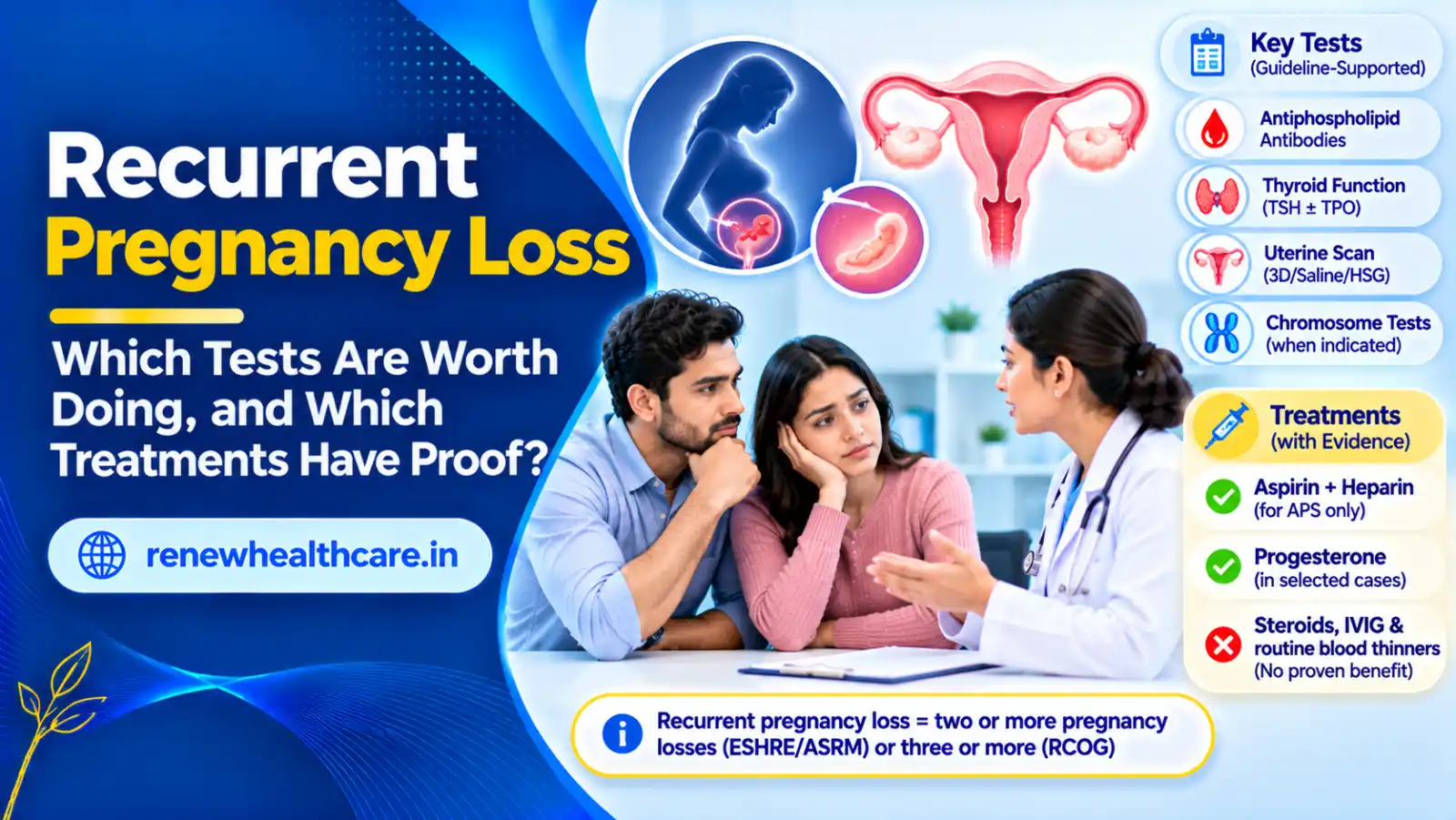
Recurrent pregnancy loss (RPL), also called recurrent miscarriage, refers to repeated pregnancy losses. However, medical organisations do not use exactly the same definition. The European Society of Human Reproduction and Embryology (ESHRE) and the American Society for Reproductive Medicine (ASRM) use two or more losses, while the Royal College of Obstetricians and Gynaecologists (RCOG) generally uses three or more first-trimester losses.
The evaluation usually focuses on specific areas, including antiphospholipid antibodies, thyroid function and the structure of the uterus. Some commonly advertised tests and treatments, particularly immune tests and therapies, do not have convincing evidence of benefit.
Understanding which investigations are supported by guidelines and which treatments have limitations can help you make informed decisions with your fertility specialist.
What Is Recurrent Pregnancy Loss?
Recurrent pregnancy loss means experiencing more than one pregnancy loss. The exact number required before a diagnosis or investigation is considered depends on the guideline being followed.
The definitions differ:
| Medical organisation | Definition |
|---|---|
| ESHRE (2022 guideline update) | Two or more pregnancy losses |
| ASRM (2026 committee opinion) | Two or more pregnancy losses before 22 weeks |
| RCOG (2023 guideline) | Three or more first-trimester miscarriages; evaluation may begin after two if a pathological cause is suspected |
ESHRE and ASRM also recognise certain pregnancies confirmed through hCG testing even when a pregnancy was not visualised on ultrasound. The definitions have differences in how they handle biochemical pregnancies and other types of pregnancy loss.
This difference mainly affects when an investigation begins. It does not mean that one organisation's recommended test is automatically more effective than another's.
If you have experienced two losses, it is reasonable to discuss with your doctor whether an evaluation is appropriate for your medical history.
Why Does Recurrent Pregnancy Loss Happen?
There is no single explanation for every case of recurrent pregnancy loss.
A cause may be identified in some couples, while others complete an appropriate evaluation without finding a clear explanation.
ESHRE estimates that approximately 40–50% of recurrent pregnancy loss remains unexplained, excluding male factors from that estimate.
Possible areas considered during an evaluation include:
Antiphospholipid syndrome and related antibodies.
Thyroid conditions.
Uterine structural abnormalities.
Chromosomal factors involving the pregnancy or parents.
Selected male reproductive factors.
Age and the complete pregnancy history also matter when discussing future pregnancy chances.
Importantly, ESHRE reports no evidence that stress is a direct cause of pregnancy loss. Experiencing a miscarriage is not proof that you did something wrong.
What Are the Chances of Having a Successful Pregnancy After Recurrent Loss?
Many couples do go on to have a successful pregnancy after recurrent pregnancy loss. However, an individual's outlook depends on several factors, particularly the woman's age and complete pregnancy history.
ESHRE recommends considering:
The woman's age.
The number of previous pregnancy losses.
Any previous live births.
The order in which pregnancies and losses occurred.
The results of investigations, where available.
A Danish registry study involving more than 1.28 million women found that previous losses were associated with a lower chance of a live birth in a subsequent pregnancy. However, age and pregnancy history could not accurately predict the outcome for an individual woman.
For unexplained recurrent pregnancy loss, the overall prognosis is generally considered good, particularly in younger women with fewer previous losses. Still, no statistical model can guarantee what will happen in an individual pregnancy.
Your doctor can discuss your history and help you understand what the available evidence means in your situation.
Which Tests Are Recommended After Recurrent Pregnancy Loss?
Not every available fertility test is necessary after repeated pregnancy loss. ESHRE and ASRM support investigations in specific areas, while advising against several routine tests that have not demonstrated sufficient clinical value.
1. Antiphospholipid Antibody Testing
Antiphospholipid syndrome (APS) is an important condition to consider during recurrent pregnancy loss evaluation.
It is an autoimmune condition associated with antibodies that can increase the risk of blood clots and pregnancy complications.
Testing may include:
Lupus anticoagulant.
Anticardiolipin antibodies.
Anti-beta-2 glycoprotein I antibodies.
ESHRE recommends antiphospholipid antibody testing after two pregnancy losses. ASRM's 2026 guidance takes a more specific approach, recommending testing when the relevant clinical criteria are met.
A positive antibody result does not automatically establish APS. Your doctor must interpret the results alongside your pregnancy history and the relevant diagnostic criteria.
2. Thyroid Function Testing
Thyroid function is another important part of the evaluation.
Thyroid hormones play a role in reproductive health and pregnancy. An underactive thyroid, particularly overt hypothyroidism, requires appropriate medical attention.
Testing may include:
TSH: Thyroid-stimulating hormone, which helps assess thyroid function.
TPO antibodies: Thyroid peroxidase antibodies, which can indicate thyroid autoimmunity.
ESHRE recommends TSH and TPO antibody testing. ASRM's 2026 guidance uses a more selective approach to thyroid testing and does not recommend routine thyroid antibody screening.
It is important to distinguish between treating an established thyroid disorder and prescribing medication simply because thyroid antibodies are present.
A clinical trial involving women with thyroid peroxidase antibodies and a history of miscarriage or infertility found no improvement in live birth with levothyroxine compared with placebo.
You can read more about the connection between thyroid health and fertility.
3. Uterine Cavity Assessment
The shape and structure of the uterus may also be assessed during recurrent pregnancy loss evaluation.
Certain uterine abnormalities can be relevant to pregnancy outcomes. Depending on your history, your doctor may recommend:
Three-dimensional ultrasound.
Hysterosalpingography (HSG).
Saline sonography.
Hysteroscopy.
ESHRE recommends assessing the uterine anatomy in women with recurrent pregnancy loss, with three-dimensional ultrasound preferred where appropriate.
ASRM also recommends uterine cavity assessment in women with unexplained recurrent pregnancy loss.
The choice of investigation depends on the suspected abnormality and the information already available from previous scans.
You can read about hysteroscopy and its role in fertility treatment.
4. Chromosome Testing of Pregnancy Tissue
Chromosomal abnormalities can be associated with pregnancy loss.
Testing the tissue from a miscarriage may help explain why a particular pregnancy ended. However, the recommendations differ between organisations.
ESHRE does not recommend routine testing of pregnancy tissue in every case, although it may be considered for explanatory purposes.
ASRM's 2026 guidance recommends offering genetic evaluation of miscarriage tissue to patients.
Your doctor can explain whether tissue testing is appropriate and whether the result could change the next steps in your evaluation.
5. Parental Chromosome Testing
In selected situations, doctors may recommend chromosome testing, also called karyotyping, for one or both parents.
This may be relevant when pregnancy tissue shows an unbalanced chromosome rearrangement or when tissue testing has not been performed.
ESHRE recommends assessing the need for parental karyotyping according to individual risk. ASRM also discusses testing in relation to the chromosome results of the pregnancy tissue.
It is not necessarily required for every couple.
Which Tests Are Not Routinely Recommended?
Some tests are frequently discussed in fertility consultations, but current ESHRE and ASRM guidance does not support their routine use for every woman with recurrent pregnancy loss.
These include:
Routine inherited thrombophilia screening.
Natural killer (NK) cell testing.
HLA testing.
Cytokine testing.
Routine ovarian reserve testing specifically for recurrent pregnancy loss.
Prolactin testing without relevant symptoms.
More testing does not always mean better diagnosis. A test is useful when its result can help explain the problem or change the treatment plan.
Which Treatments Have Evidence for Recurrent Pregnancy Loss?
Treatment should be based on the cause identified during the evaluation. A medicine that may help one specific condition should not automatically be prescribed to everyone with recurrent miscarriage.
1. Low-Dose Aspirin and Heparin for Confirmed Antiphospholipid Syndrome
Low-dose aspirin combined with heparin may be considered for women with confirmed antiphospholipid syndrome and recurrent pregnancy loss.
A Cochrane review found that the combination may improve live birth compared with aspirin alone in women with persistent antiphospholipid antibodies. However, the evidence was of low certainty and was influenced by one large study.
ESHRE suggests aspirin and heparin in selected women with confirmed APS and three or more pregnancy losses. Its recommendation for women with two losses is more cautious.
The important distinction is that these medicines are not recommended as routine treatment for unexplained recurrent pregnancy loss.
Using blood thinners without an appropriate indication can expose you to unnecessary risks, including bleeding.
2. Aspirin or Heparin Without Antiphospholipid Syndrome
If testing does not establish APS, routine aspirin or heparin is not supported for preventing unexplained pregnancy loss.
ESHRE recommends against this approach for unexplained recurrent pregnancy loss and also advises against using it routinely for inherited thrombophilia in this context.
ASRM's guidance is consistent with avoiding unsupported treatment.
Blood-thinning medication should therefore be prescribed only when there is a clinical reason.
3. Progesterone
Progesterone is a hormone involved in preparing and maintaining the uterine lining during pregnancy.
It is sometimes discussed after recurrent miscarriage, but the evidence does not support routine use for every woman with unexplained pregnancy loss.
A 2025 Cochrane review found that progesterone probably makes little or no difference to live birth in women with unexplained recurrent miscarriage overall.
However, ESHRE says vaginal progesterone may help selected women who have experienced three or more pregnancy losses and develop bleeding during a subsequent pregnancy.
ASRM also notes that progesterone may be offered in the presence of bleeding, while evidence for routine use remains unproven.
The decision should depend on your history and current pregnancy symptoms.
4. Levothyroxine for Thyroid Conditions
Levothyroxine is a prescription medicine used to treat hypothyroidism.
If testing identifies overt hypothyroidism, treatment is recommended because thyroid hormone levels need to be appropriately managed.
However, having thyroid peroxidase antibodies alone does not automatically mean levothyroxine will improve pregnancy outcomes.
A major clinical trial found no meaningful improvement in live birth rates when women with thyroid antibodies but without the relevant thyroid hormone deficiency received levothyroxine.
This is why treatment should be based on thyroid function and the actual diagnosis, not antibody results alone.
5. IVIG and Other Immune Treatments
Some clinics discuss immune-based treatments for recurrent pregnancy loss. These may include intravenous immunoglobulin (IVIG), steroids, intralipid infusions, lymphocyte immunisation and granulocyte colony-stimulating factor (G-CSF).
However, the evidence is limited or does not demonstrate a reliable benefit for most of these treatments.
The Cochrane review of IVIG available in the source material found no clear overall benefit across eight trials involving 303 women.
ESHRE has a conditional recommendation concerning repeated high-dose IVIG in a very specific group of women with four or more unexplained losses, based on one trial. ASRM's 2026 guidance lists IVIG among interventions with no proven benefit or insufficient evidence.
ESHRE recommends against steroids and lymphocyte immunisation, finds no evidence supporting G-CSF, and considers the evidence for intralipid insufficient.
These treatments should not be presented as established solutions for recurrent pregnancy loss.
6. Is PGT-A Helpful After Repeated Miscarriages?
Preimplantation genetic testing for aneuploidy (PGT-A) checks chromosome numbers in a small sample of cells taken from an IVF embryo.
It may be discussed in selected circumstances, but current evidence does not support using it routinely to prevent recurrent pregnancy loss.
ESHRE reports limited evidence and no clear benefit for routine use. ASRM also states that PGT-A has not been shown to reduce miscarriage or increase live birth compared with not using the test, although shared decision-making may be appropriate for selected women over 40 with a proven aneuploid miscarriage.
PGT-A is not a guaranteed way to prevent another miscarriage.
Read more about genetic testing in IVF and the different testing approaches.
Does Removing Uterine Polyps or Fibroids Prevent Recurrent Pregnancy Loss?
Uterine abnormalities may be considered during an evaluation, but surgery should not automatically be recommended as a solution for repeated pregnancy loss.
ESHRE notes that evidence supporting the removal of polyps or fibroids specifically to prevent recurrent pregnancy loss is insufficient.
One small trial also found no benefit from surgical removal of a uterine septum in the studied population.
The decision to remove a polyp, fibroid or other uterine abnormality should therefore depend on its location, symptoms, clinical significance and the available evidence.
You can learn more about uterine polyps and their possible effect on fertility and adenomyosis and fertility.
Can Male Fertility Factors Contribute to Recurrent Pregnancy Loss?
Recurrent pregnancy loss evaluation should not focus only on the woman.
ESHRE recommends considering the male partner's age, smoking, alcohol consumption, exercise and weight.
Sperm DNA fragmentation testing may also be considered in selected couples, particularly when the pregnancy losses remain unexplained. However, there is still uncertainty about which testing method is most informative because different methods and laboratory protocols are available.
If a male fertility concern is suspected, your doctor may recommend an appropriate evaluation rather than assuming that the cause is exclusively related to the woman's reproductive health.
You can also read about low sperm count and male fertility.
What Can You Do After Recurrent Pregnancy Loss?
Not every pregnancy loss can be prevented, and lifestyle advice should never be used to blame someone for what happened.
ESHRE recommends general health measures that may support reproductive health, including:
Stopping smoking.
Maintaining a healthy body weight.
Limiting alcohol consumption.
Avoiding excessive exercise.
ESHRE also reports no evidence that stress is a direct cause of pregnancy loss. Women who blame themselves for drinking alcohol before an earlier miscarriage can be reassured that the guideline found no evidence of a causal link.
Emotional support is also important. Repeated pregnancy loss can bring grief, anxiety and a sense of personal failure. Even when investigations are normal and the prognosis is encouraging, the emotional impact can remain significant.
Some couples may benefit from additional support during a subsequent pregnancy, such as planned consultations and ultrasound monitoring, depending on their clinical needs.
When Should You Stop Testing and Treatment?
An evaluation should have a clear purpose. Repeating tests without a clinical reason or starting treatments without an established indication may add cost and uncertainty without improving outcomes.
After the guideline-supported investigations have been completed and no cause is identified, the condition may be classified as unexplained recurrent pregnancy loss.
At that point, additional routine investigations do not necessarily have guideline support.
It is reasonable to ask your doctor:
Which tests are relevant to my pregnancy history?
What will each test help us understand?
What treatment would change if a result is abnormal?
What happens if all the recommended tests are normal?
Which treatments have evidence for my specific diagnosis?
A useful question to take into your consultation is:
"Which of these tests apply to my history, and what will we do if they are all normal?"
Frequently Asked Questions
1. How Many Miscarriages Count as Recurrent Pregnancy Loss?
ESHRE and ASRM define recurrent pregnancy loss as two or more pregnancy losses. RCOG generally uses three or more first-trimester miscarriages, although evaluation may begin after two if a pathological cause is suspected. The definition used may affect when testing begins.
2. Can I Conceive Naturally After Recurrent Pregnancy Loss?
Yes, many couples conceive naturally after recurrent pregnancy loss. The chances depend on the woman's age and complete pregnancy history, including the number and sequence of previous losses and any live births. No prediction tool can guarantee an individual outcome.
3. Did Stress or My Lifestyle Cause My Miscarriages?
ESHRE reports no evidence that stress is a direct cause of pregnancy loss. Smoking, alcohol use, obesity and excessive exercise may affect the chance of a live birth, so general health advice is appropriate. However, this does not mean you should blame yourself for a previous miscarriage.
4. Do I Need Blood-Thinner Injections in My Next Pregnancy?
Aspirin and heparin may be considered in selected women with confirmed antiphospholipid syndrome. They are not recommended as routine treatment for unexplained recurrent pregnancy loss. These are prescription medicines with potential risks, so the decision should be made with your doctor.
5. Does My Husband Need Tests After Recurrent Pregnancy Loss?
Male factors may also be relevant. ESHRE recommends considering the male partner's age, smoking, alcohol, exercise and weight. Sperm DNA fragmentation testing may be considered in selected unexplained cases, although the most informative testing method remains uncertain.
6. Should I Choose IVF With PGT-A After Repeated Pregnancy Loss?
Not routinely. ESHRE reports no clear benefit, and ASRM states that PGT-A has not been shown to reduce miscarriage or increase live birth compared with not using the test. It may be discussed in selected situations, including some women over 40 with a confirmed aneuploid miscarriage.
Conclusion
Recurrent pregnancy loss can be emotionally difficult, and finding a clear explanation is not always possible. ESHRE, ASRM and RCOG differ in their definitions, but their guidance supports a focused evaluation rather than automatically ordering every available fertility test.
Antiphospholipid antibody testing, thyroid assessment and examination of the uterine cavity are important parts of the investigation. Treatment should match the diagnosis: aspirin with heparin may be considered for confirmed antiphospholipid syndrome, while routine immune therapies and blood thinners without an appropriate indication lack convincing support.
Your age and complete pregnancy history help guide the discussion about future pregnancy chances. If the recommended tests are normal, that does not mean there is no hope. It means the next steps should be planned carefully, with realistic expectations and appropriate emotional support.
Medical Review: Dr. Arnab Kundu — View Doctor Profile
This article is for general educational purposes and does not replace individual medical advice. Please consult a qualified fertility specialist about your own situation.