
By Dr. Neha Yadav, Infertility Specialist, Salt Lake, Kolkata
Archana is a fictional, composite example of a woman aged 29. After years of being told to “just lose weight,” she began seeing changes on the scale with a weight-management injection. Her question was an important one: “What happens if I want a baby next year?”
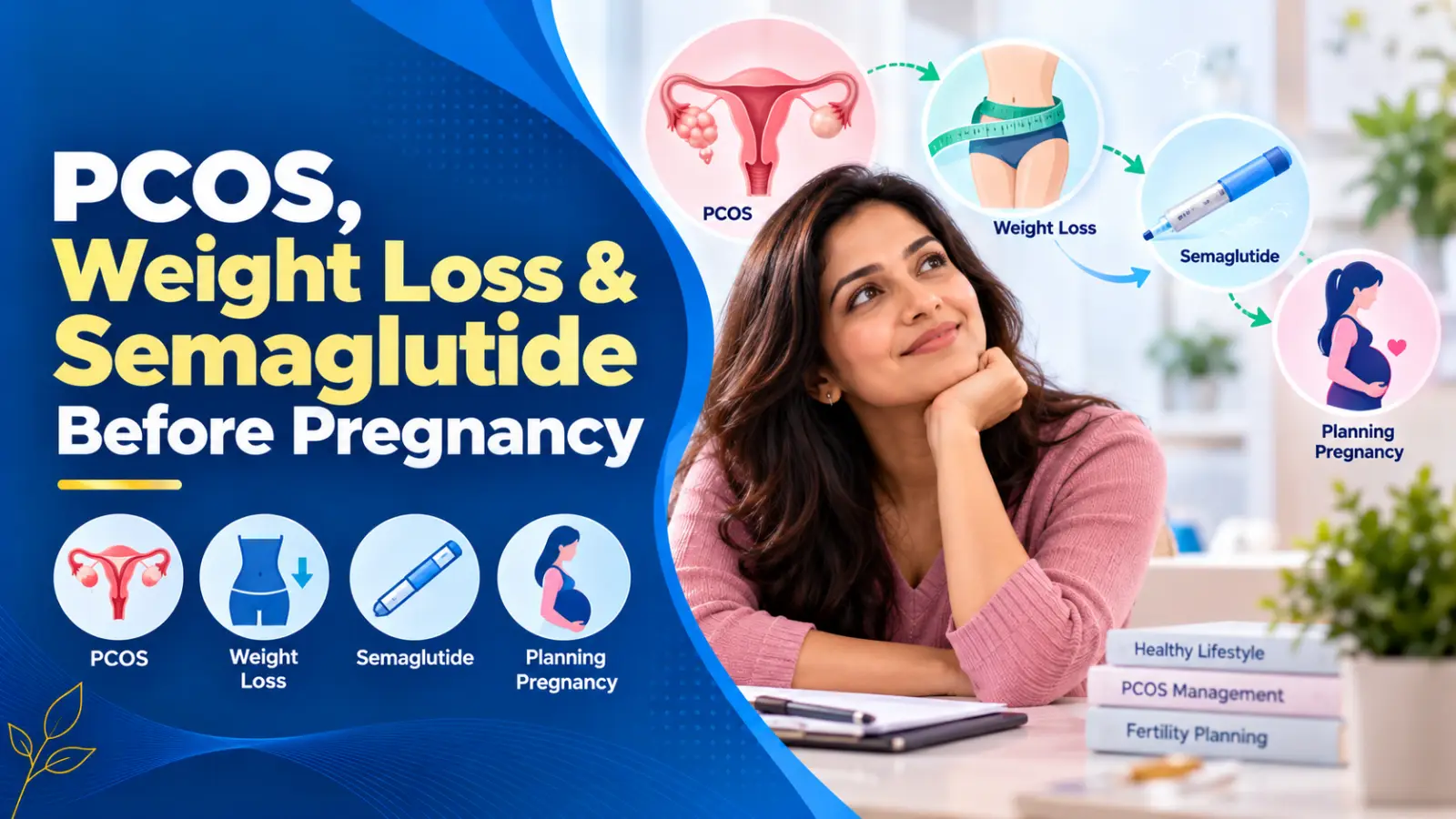
For women living with polycystic ovary syndrome (PCOS), weight management and pregnancy planning can raise difficult questions. Semaglutide may help some women manage their weight, but it is not a cure for PCOS and is not intended for use during pregnancy.
If you have PCOS and are considering pregnancy, the important step is to plan your treatment and its discontinuation with your doctor rather than stopping medication at the last minute.
Key Takeaways
Semaglutide is not for use during pregnancy, so pregnancy planning should include a planned stop date.
The UK regulator, MHRA, advises leaving at least two months between stopping semaglutide and trying to conceive.
One small trial reported improvements in weight and natural pregnancy outcomes with semaglutide plus metformin, but the evidence is still preliminary.
Weight regain can occur after stopping treatment.
Ovulation may return as weight changes, so contraception is important if you are not yet ready for pregnancy.
Why Are PCOS and Weight Connected?
Polycystic ovary syndrome can affect hormone levels and ovulation. In many women with PCOS, insulin resistance contributes to higher androgen levels and irregular menstrual cycles. Additional weight can worsen insulin resistance.
Think of ovulation as traffic moving through a busy road. When insulin resistance and hormonal imbalance interfere with the process, the cycle may become irregular. For some women, modest weight loss can help menstrual cycles become more regular.
Lifestyle changes therefore remain an important first step in PCOS management. The most appropriate plan depends on your medical history, symptoms and pregnancy goals.
Weight loss alone does not guarantee that ovulation will return, and not every woman with PCOS needs the same treatment.
What Does Semaglutide Do?
Semaglutide acts like a gut hormone called GLP-1. It can slow stomach emptying, reduce appetite and help lower blood sugar. It is given as an injection, commonly on a weekly schedule.
Semaglutide does not cure PCOS. It is used to address weight and metabolic factors that may contribute to PCOS symptoms in some women.
The medicine has a half-life of approximately one week, which means it remains in the body for weeks after the final dose. That is why stopping treatment needs to be planned in advance when pregnancy is a goal.
Do not start semaglutide, change your dose or decide when to stop it without discussing your situation with a qualified doctor.
Can Semaglutide Help You Conceive?
A 2025 randomised trial from Chongqing compared metformin alone with metformin plus semaglutide over 16 weeks. Eighty women completed the study.
The reported results were as follows:
| Outcome | Metformin alone | Metformin plus semaglutide |
|---|---|---|
| Weight change | −2.3 kg | −6.1 kg |
| Menstrual cycles returned | 42.3% | 72.5% |
| Natural pregnancy | 15% | 35% |
| Total pregnancy | No statistically significant difference reported | No statistically significant difference reported |
These results are interesting, but they need to be interpreted cautiously. The study was conducted at a single centre, was open-label, had a 20% dropout rate and contained internal inconsistencies in its reported numbers.
This is emerging research, not definitive evidence that semaglutide is a fertility treatment. It does not establish that the medicine should be used to improve pregnancy chances.
Why Could Ovulation Return Unexpectedly?
As weight and insulin resistance change, ovulation may return even if your periods have been irregular for a long time.
That can be encouraging if you are actively planning a pregnancy. However, it may also result in an unexpected pregnancy if you are not ready to conceive.
If pregnancy is not your immediate goal, discuss contraception with your doctor while using semaglutide and during the period before it is safe to start trying.
Is Semaglutide Safe Before and During Pregnancy?
Semaglutide should not be used during pregnancy. If you are planning to conceive, ask your doctor to help you set a stop date well in advance.
The source material reports that the UK regulator, MHRA, advises stopping semaglutide at least two months before trying to conceive.
Emerging pregnancy research needs careful interpretation:
A Denmark study published in 2026 in Human Reproduction Open included 756,636 pregnancies, of which 529 involved semaglutide exposure. Preterm birth was reported as higher only among women with diabetes. For women using semaglutide for weight management, the adjusted odds ratio was 0.71, with a 95% confidence interval of 0.30–1.70. The interval was wide, so the study cannot confidently rule risks in or out.
A 2026 report in Annals of Internal Medicine examined approximately 3,600 pregnancies involving continuation or discontinuation during the first trimester. It did not establish a definitive increase in pregnancy loss or growth problems.
These findings should not be interpreted as proof that semaglutide is safe to take during pregnancy. The available evidence is still limited.
If you discover that you are pregnant while taking semaglutide, contact your doctor promptly. Do not panic, and do not make further treatment decisions without medical advice.
Myth vs Fact: PCOS and Semaglutide
Myth: Semaglutide cures PCOS.
Fact: Semaglutide may help with weight management and insulin resistance. It does not cure PCOS, and symptoms may return if weight is regained.
Myth: “Ozempic babies” prove that semaglutide improves fertility.
Fact: Anecdotal reports do not prove a direct fertility benefit. When weight changes, ovulation may return, which can explain some unexpected pregnancies.
Myth: Stopping semaglutide has no consequences.
Fact: Weight regain is common after stopping weight-management treatment. The source material flags the specific evidence reference for verification, so the extent of weight regain should not be assumed to be identical for everyone.
Myth: If my periods are irregular, I cannot become pregnant.
Fact: Ovulation can occur unpredictably even when periods are irregular. Pregnancy is possible, so contraception and pregnancy planning should be discussed with your doctor.
Common Mistakes to Avoid
1. Buying unverified products online
Do not buy unverified semaglutide vials or products from unlicensed sellers. Use prescribed treatment obtained through a licensed pharmacy.
2. Waiting until the day you want to conceive to stop
Semaglutide remains in the body for weeks after the final dose. Plan the discontinuation period with your doctor before you start trying for pregnancy.
3. Assuming irregular periods mean there is no ovulation
Ovulation may return before menstrual cycles become predictably regular. If pregnancy is not planned, discuss contraception.
4. Treating semaglutide as a fertility medicine
Semaglutide is not a cure for PCOS or a guaranteed way to become pregnant. Treatment decisions should be based on your weight-management needs, metabolic health and reproductive plans.
A Pregnancy-Planning Checklist
If you have PCOS and are considering semaglutide, discuss these steps with your doctor:
Explain your pregnancy plans before starting. Your doctor needs to know whether you hope to conceive soon or in the future.
Agree on a stop date. Plan when to discontinue semaglutide before attempting pregnancy.
Use contraception until you are ready. Ovulation may return as your weight changes.
Discuss folic acid. The source material suggests 400 micrograms daily but flags the dose for verification according to individual risk. Confirm the appropriate dose with your doctor.
Protect muscle while losing weight. Discuss protein-rich meals and strength training as part of your plan.
Plan follow-up after stopping. Weight and menstrual symptoms may change, so ongoing medical support can be useful.
Discuss options if periods do not return. Your doctor can assess whether further evaluation or ovulation-induction treatment is appropriate.
Frequently Asked Questions
Can I get pregnant while taking semaglutide if I have PCOS?
Yes, pregnancy can occur because ovulation may return as weight changes, even if periods have been irregular. However, semaglutide is not intended for use during pregnancy. Discuss contraception and pregnancy planning with your doctor.
Will my PCOS return after I stop semaglutide?
PCOS does not necessarily disappear while you are taking semaglutide. Weight regain may contribute to the return or worsening of symptoms for some women. Continued lifestyle habits and medical follow-up can help you manage your condition.
Is generic semaglutide in India the same?
Prices and products can differ. Do not assume that an unverified product is equivalent to an approved medicine. Use an appropriate product prescribed by your doctor and obtained through a licensed pharmacy. The pregnancy-planning advice still needs to be followed.
Is metformin an alternative?
Metformin is a long-established option for addressing insulin resistance in appropriate patients. Whether it is suitable for you, alone or alongside other treatment, depends on your medical circumstances. Your doctor can compare the options based on your health and pregnancy plans.
How long before trying to conceive should I stop semaglutide?
The source material states that the MHRA advises stopping semaglutide at least two months before trying to conceive. Confirm the timing with your prescribing doctor and do not rely on a self-selected stop date.
What if I become pregnant while taking semaglutide?
Contact your doctor promptly for individual advice. The available observational research does not establish that exposure is safe, but it also does not mean that a harmful outcome is certain. Avoid panicking and seek medical guidance.
Conclusion
Semaglutide may be a useful weight-management option for some women with PCOS, but it is not a cure for PCOS and should not be used during pregnancy.
The safest approach is a planned one. Tell your doctor about your pregnancy goals before starting treatment, agree on when to stop, use contraception until you are ready to conceive, and arrange follow-up for weight and menstrual changes.
If you have PCOS and are planning a pregnancy, seek individual guidance from a qualified fertility specialist rather than relying on online claims or anecdotal success stories.
For information about your fertility specialist, visit Dr. Neha Yadav’s profile at Renew Healthcare, or explore the Renew Healthcare website.
This article is for general educational purposes and does not replace individual medical advice. Consult a qualified healthcare professional about your medication, PCOS symptoms and pregnancy plans.