
Medically reviewed by Dr. Arnab Kundu, MBBS, DGO, DNB (OBY-GYN), 15+ years’ experience — Infertility Specialist, IVF Expert & Gynaecologist at Renew Healthcare, Kolkata
Last updated: 12 October 2026
In brief: Erectile dysfunction (ED) means a persistent inability to get or keep an erection firm enough for sex. Causes include blood flow problems, diabetes, some medicines, hormone changes and stress. PDE5 inhibitor tablets are the first-line treatment, and lifestyle changes can help. ED does not measure sperm quality, so a semen analysis is still needed.
Why This Worry Is Common When You Are Trying for a Baby
Many couples only talk about erections when timing starts to matter, and pressure around the fertile days can make things harder. When intercourse becomes difficult during the period when a couple is trying to conceive, it can add stress to an already challenging experience.
This article covers the causes of erectile dysfunction, what it does and does not affect, the evidence for treatment, and when to get medical help quickly.
What Is Erectile Dysfunction?
The European Association of Urology (EAU) defines erectile dysfunction as the persistent inability to attain and maintain an erection sufficient to permit satisfactory sexual performance.¹ ²
One difficult night does not mean you have erectile dysfunction. The important word is persistent. If erection difficulties continue, a medical assessment can help identify possible causes and appropriate treatment options.
Common Causes of Erectile Dysfunction
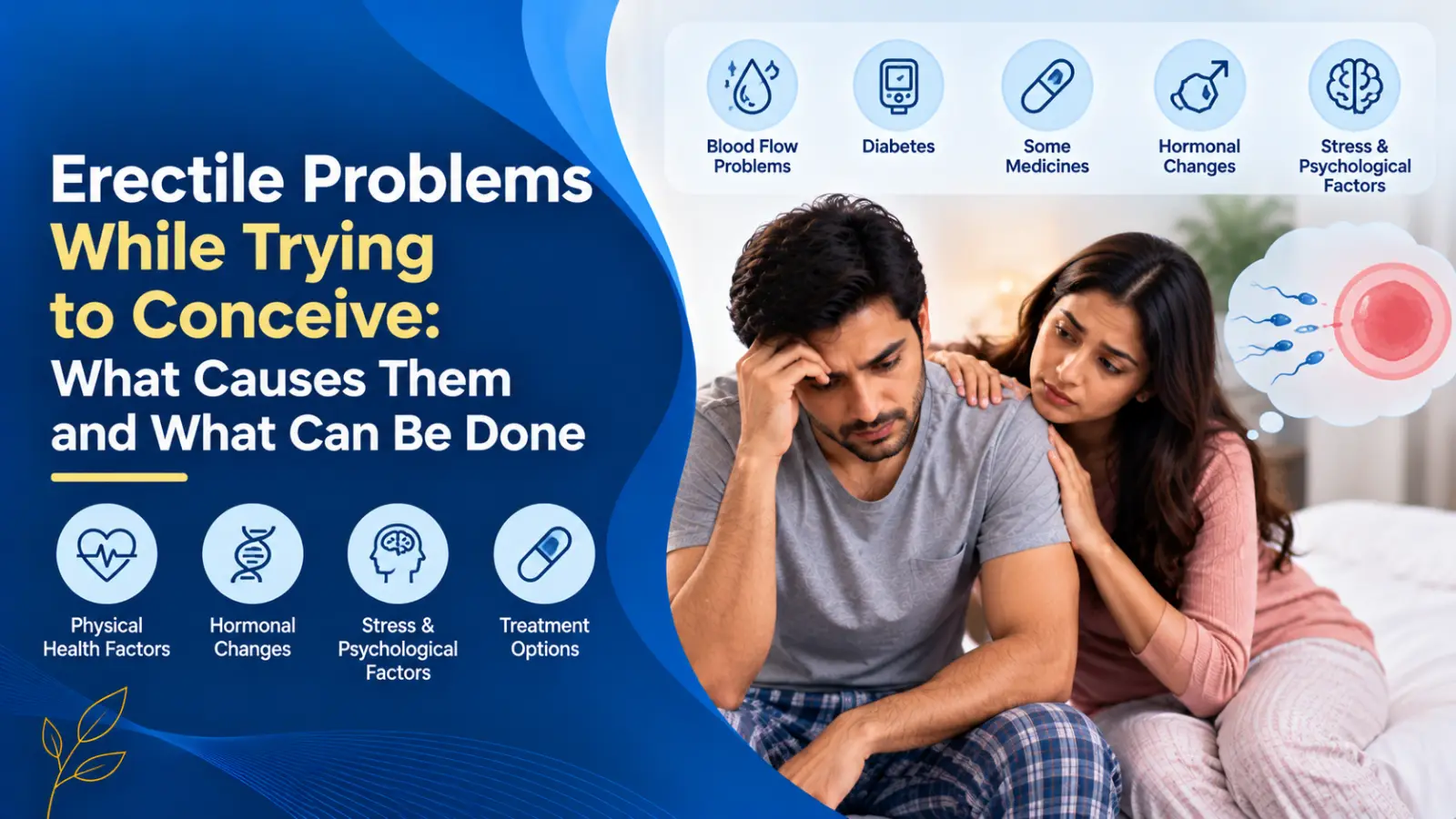
The EAU groups causes into several categories. Many men have more than one contributing factor at the same time.¹
| Cause group | Examples | What it means for you |
|---|---|---|
| Blood flow | Smoking, physical inactivity, obesity, high blood pressure, heart disease and high cholesterol | These share risk factors with heart and blood vessel disease. |
| Diabetes | Type 1 or type 2 diabetes | Blood sugar control is an important first step in treatment. |
| Medicines and substances | Some blood pressure tablets, antidepressants, antipsychotics, hormone-blocking drugs, alcohol and recreational drugs | Do not stop a prescribed medicine on your own. Discuss it with the prescriber. |
| Hormones | Low testosterone, thyroid problems and cortisol problems | Testosterone testing is part of the EAU assessment. |
| Psychological factors | Depression, anxiety, performance stress and relationship strain | Psychological and physical causes can occur together. |
Your doctor may ask about your medicines, smoking, alcohol use, sleep and mood. Blood tests for blood sugar, cholesterol and testosterone are commonly part of the assessment.¹
Why Erectile Dysfunction Matters When You Are Trying to Conceive
Pregnancy requires intercourse, and intercourse may be difficult when an erection cannot be achieved or maintained. If erectile dysfunction makes sex difficult or impossible, timing intercourse around ovulation becomes harder. Some couples may stop trying to have intercourse altogether, lowering the chance of pregnancy in a given month.
However, erectile dysfunction does not tell us whether sperm quality is normal.
A man with erectile dysfunction can have normal sperm, while a man with normal erections can have a low sperm count. These are separate questions, and each needs its own assessment.
Treatment Options and How Strong the Evidence Is
The EAU grades its recommendations. The following table reflects the recommendations described in the source guidance.¹
| Treatment option | What the EAU says | Recommendation strength | What it does not do |
|---|---|---|---|
| PDE5 inhibitor tablets | First-line therapy for erectile dysfunction | Strong | They are not a fertility treatment. This article does not claim that they improve sperm count or live birth because verified evidence for that claim was not found in the source material. |
| Lifestyle changes | Weight loss, regular aerobic exercise and stopping smoking; start at the same time as or before drug treatment | Strong. Evidence for exercise and weight loss is level 1b. | Lifestyle changes do not replace assessment for other conditions. |
| Psychological therapy | Cognitive behavioural therapy, with your partner where appropriate, alongside medical treatment when indicated | Strong | It works alongside treatment, not instead of a medical assessment. |
| Blood sugar, cholesterol and testosterone tests | Identify potentially reversible risk factors | Strong recommendation for assessment | A test result does not treat erectile dysfunction by itself. |
A tablet may treat an erection, but on its own it does not answer the fertility question.
The choice of tablet and dose must be decided by your prescriber. This article does not provide medication doses.
Why a Semen Analysis Is Still Needed
Erection assessments and semen tests answer different questions. An erection assessment looks at whether intercourse is possible. A semen analysis examines sperm number, movement and shape.
The EAU states that semen analysis alone cannot distinguish fertile from infertile men. It also states that a comprehensive andrological examination is indicated in infertile couples, even when semen results are normal.³
Read our related guide, Role of Semen Analysis in Men's Infertility Treatment, to understand why semen testing is a separate part of fertility assessment.
When to See a Doctor Urgently
Seek medical help promptly in the following situations:
An erection lasting more than four hours: If it is painful or does not go down, this is a medical emergency. Go to an emergency department immediately.⁴
Chest pain, breathlessness or fainting during or after sex: Seek emergency care.
Sudden erectile dysfunction or new heart symptoms: Arrange prompt medical review.
Diabetes with poor blood sugar control or new erectile dysfunction in someone with diabetes: Arrange a medical review soon. The EAU identifies good diabetes control as an important first step in erectile dysfunction treatment.¹
The EAU also describes erectile dysfunction as a precursor of cardiovascular disease. New erectile difficulties are therefore a reason to discuss heart risk factors with your doctor.¹
Questions you can ask include:
Could my erection problem be linked to a medicine, my blood sugar, my blood pressure or my hormones?
Which test results could change our next step as a couple?
Frequently Asked Questions
Can erectile dysfunction stop us from conceiving?
It can, if it makes intercourse difficult or prevents it. Erectile dysfunction can reduce how often a couple has sex around the fertile days, lowering the chance of pregnancy. It does not directly measure sperm quality, so a semen analysis and a full medical review are also needed. Treating erectile dysfunction may make intercourse easier.
Do erectile dysfunction tablets improve sperm count?
The source material did not identify verified evidence that PDE5 inhibitor tablets improve sperm count or live birth. These medicines are used to treat erections, and this article does not claim otherwise.
To understand sperm health, a semen analysis is needed, and the result should be discussed with a specialist.
Are lifestyle changes worth trying?
Yes. The EAU gives a strong recommendation to begin lifestyle changes before or alongside drug treatment. Regular aerobic exercise and weight loss may improve sexual function, with evidence graded as level 1b. Stopping smoking is also identified as an important risk-factor change. These steps support heart and blood vessel health as well.¹
Why do I need a semen analysis if I have erectile dysfunction?
Because erectile dysfunction does not measure sperm quality. A semen analysis examines sperm number, movement and shape. The EAU states that semen analysis alone cannot distinguish fertile from infertile men, so it is one part of the assessment rather than the complete answer.³
Can erectile dysfunction be a sign of heart problems?
It can be. The EAU describes erectile dysfunction as a precursor of cardiovascular disease. The two can share risk factors, including smoking, high blood pressure and diabetes.¹ If new erectile difficulties appear, ask your doctor to assess these factors.
What should I do if an erection will not go down?
A painful erection lasting more than four hours is a medical emergency. Go to an emergency department immediately and do not wait for it to settle.⁴ An erection lasting more than four hours without pain also needs urgent medical review.
The Bottom Line
Erectile dysfunction is a common problem with several possible causes, and many causes can be treated. PDE5 inhibitors are first-line medicines for erections, while lifestyle changes can support erectile and cardiovascular health.
Erectile dysfunction does not tell you whether your sperm quality is normal. A semen analysis and a full medical review are still needed when you are trying to conceive.
Seek urgent medical help if an erection lasts more than four hours or if you experience chest symptoms, breathlessness or fainting during or after sex.
Talk to a Specialist
Dr. Arnab Kundu is an infertility specialist and IVF expert at Renew Healthcare, Kolkata.
If you are experiencing erection difficulties while trying to conceive, discuss your concerns, semen results and general health with a qualified specialist. The next step should be based on your individual circumstances and medical assessment.
Book a consultation: Renew Healthcare
For related fertility information, read:
This article is for general education and does not replace individual medical advice. Please consult a qualified healthcare professional about your own situation.
References
European Association of Urology. EAU Guidelines on Sexual and Reproductive Health: Management of Erectile Dysfunction chapter. Online version read October 2026; the page does not state its year.
European Urology. EAU Guidelines on Male Sexual and Reproductive Health: 2025 Update on Male Hypogonadism, Erectile Dysfunction, Premature Ejaculation, and Peyronie's Disease. 2025. PII S0302-2838(25)00211-8. Volume and pages were not confirmed in the source document; verify before publication.
European Association of Urology. EAU Guidelines on Sexual and Reproductive Health: Male Infertility chapter. 2022 edition.
American Urological Association and Society for Male Reproduction and Urology. Diagnosis and Management of Priapism: AUA/SMSNA Guideline. 2022.