
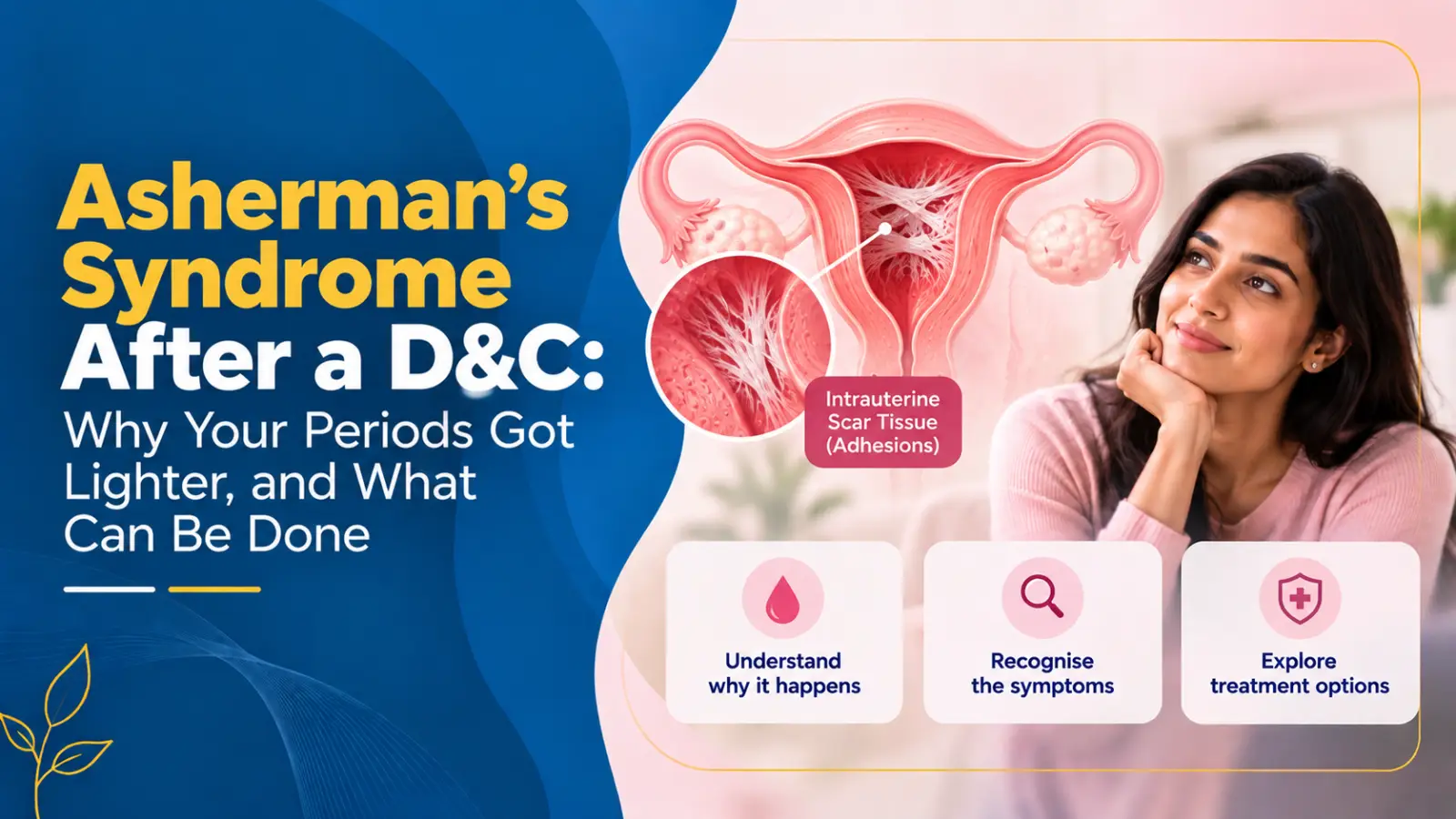
A noticeable change in your periods after a D&C can be easy to dismiss. But if your periods became much lighter, turned into only a day of brown spotting, or stopped altogether after a uterine procedure, there is one condition worth discussing with your doctor: Asherman’s syndrome.
Asherman’s syndrome occurs when scar tissue, or adhesions, forms inside the uterus. It can develop after a D&C, particularly after a miscarriage or delivery, and may affect menstruation, fertility, and pregnancy. 21 - Ashermans Syndrome After a…
The good news is that it can be diagnosed and treated, particularly when identified early.
What Is Asherman’s Syndrome?
The inside of the uterus is normally lined by the endometrium. This lining thickens during the menstrual cycle and provides the surface where an embryo can implant.
When the deeper layer of the uterine lining is injured, the healing surfaces can stick together. These bands of scar tissue are called intrauterine adhesions.
Depending on the extent of scarring, adhesions can range from a few thin bands to extensive scarring that significantly reduces the size of the uterine cavity. 21 - Ashermans Syndrome After a…
The Classic Sign: Periods Become Much Lighter After a D&C
One of the most important clues is a clear change in your menstrual pattern following a uterine procedure.
For example:
- Periods that were previously normal become very light
- Bleeding lasts only a day or two
- Periods become mostly brown spotting
- Periods stop completely
- You experience cyclical pelvic pain despite very little bleeding
- You have difficulty conceiving afterward
The combination of a previous D&C followed by significantly lighter or absent periods should be discussed with a fertility specialist. 21 - Ashermans Syndrome After a…
It is not proof that you have Asherman’s syndrome, but it is a history that deserves proper evaluation.
What Causes Asherman’s Syndrome?
D&C after miscarriage or delivery is a classic setting, particularly when procedures are repeated.
Other possible causes include:
- Surgery inside the uterine cavity, such as fibroid or polyp removal
- Certain procedures associated with caesarean delivery
- Genital tuberculosis
- Severe uterine infection
The source specifically highlights genital tuberculosis as an important but under-recognised cause of intrauterine scarring in India. 21 - Ashermans Syndrome After a…
Importantly, most D&Cs do not cause Asherman’s syndrome. The condition is a possible complication, not an inevitable result of the procedure.
What Symptoms Should You Look For?
Symptoms can vary depending on how much of the uterine cavity is affected.
1. Much lighter or absent periods
This is the classic warning sign, particularly when it begins after a uterine procedure.
2. Cyclical pelvic pain
Some women experience period-like pain without much menstrual bleeding.
3. Infertility
Scar tissue can reduce the available implantation surface or affect the uterine cavity.
4. Recurrent miscarriage
Significant uterine scarring may interfere with a healthy pregnancy.
5. No obvious symptoms
Some women only discover the adhesions during an investigation for infertility. 21 - Ashermans Syndrome After a…
Can an Ultrasound Miss Asherman’s Syndrome?
Yes.
A routine ultrasound can sometimes appear normal even when intrauterine adhesions are present. Adhesions can be thin and difficult to identify on a standard scan. A persistently thin endometrium may provide an additional clue. 21 - Ashermans Syndrome After a…
This is particularly important if you have the classic history of lighter periods after a D&C.
A normal ultrasound does not necessarily settle the question.
You can ask your doctor:
“Has my uterine cavity actually been evaluated with hysteroscopy or saline sonography?”
How Is Asherman’s Syndrome Diagnosed?
Several tests can help evaluate the uterine cavity.
Hysteroscopy
Hysteroscopy uses a thin camera passed through the cervix to directly examine the inside of the uterus.
It is considered the key method for directly visualising intrauterine adhesions and can also be used as the treatment platform. 21 - Ashermans Syndrome After a…
Saline Infusion Sonography
Saline infusion sonography (SIS) uses fluid to outline the uterine cavity during ultrasound and provides a non-surgical way of assessing its shape.
HSG
A hysterosalpingogram (HSG), commonly used for tubal assessment, may sometimes reveal filling defects or a smaller-than-expected uterine cavity.
How Is Asherman’s Syndrome Treated?
The primary treatment described in the source is hysteroscopic adhesiolysis.
During this procedure, the surgeon passes instruments through the cervix and carefully separates the scar tissue under direct visualisation. There are no abdominal incisions, and it is usually performed as a day procedure. 21 - Ashermans Syndrome After a…
The goals are to:
- Restore the shape of the uterine cavity
- Allow menstruation to return
- Create an endometrial surface capable of supporting implantation
Can the Scar Tissue Come Back?
Yes.
One of the major challenges after treatment is re-scarring. After adhesions are separated, the healing surfaces can sometimes stick together again.
Depending on the situation, doctors may use measures such as hormonal treatment to help the lining regrow or temporary devices to keep the uterine walls apart. Follow-up evaluation is therefore an important part of treatment. 21 - Ashermans Syndrome After a…
Does Severity Affect Treatment Results?
Yes.
Milder disease generally has better outcomes, particularly when treated by an experienced hysteroscopic surgeon.
More severe disease, where a substantial portion of the uterine lining has been damaged, may improve only partially and can require repeat treatment. Pregnancies after significant Asherman’s syndrome also require appropriate obstetric attention because placental complications can be more common. 21 - Ashermans Syndrome After a…
Because surgical experience matters, it is reasonable to ask a specialist how frequently their centre performs hysteroscopic adhesiolysis.
Can You Get Pregnant After Asherman’s Syndrome?
Yes, many women conceive after treatment, particularly when the disease is mild.
However, untreated significant intrauterine scarring can reduce fertility and increase miscarriage risk. Restoring the uterine cavity is therefore an important part of fertility management when Asherman’s syndrome is present. 21 - Ashermans Syndrome After a…
Does Asherman’s Syndrome Affect IVF?
Yes.
IVF can bypass problems involving the fallopian tubes, but it cannot simply bypass a severely scarred uterine cavity.
The embryo still needs an appropriate uterine surface for implantation. Therefore, when significant intrauterine adhesions are present, the uterine cavity generally needs to be addressed before proceeding with embryo transfer. 21 - Ashermans Syndrome After a…
If you are considering IVF, you can learn more about IVF treatment at Renew Healthcare.
Frequently Asked Questions
My periods almost stopped after a D&C. Does that mean I have Asherman’s syndrome?
Not necessarily. Hormonal changes, breastfeeding, and other causes can also alter periods. However, the combination is significant enough to warrant evaluation of the uterine cavity rather than simply assuming it is normal. 21 - Ashermans Syndrome After a…
Is hysteroscopic adhesiolysis painful?
It is typically performed as a short procedure under anaesthesia. As with any procedure, risks exist, including recurrence and, rarely, uterine perforation. Surgical experience can influence these risks. 21 - Ashermans Syndrome After a…
How soon can I try for pregnancy after treatment?
Usually, the uterine cavity is checked to confirm that it has healed and remains open and that the lining is rebuilding. The exact timing depends on your surgeon's treatment protocol. 21 - Ashermans Syndrome After a…
Can genital TB cause Asherman’s syndrome?
Yes. Genital tuberculosis can sometimes occur without obvious symptoms and may present later through uterine scarring and infertility. The source specifically highlights it as an important consideration in India, particularly when severe scarring occurs without a previous uterine procedure. 21 - Ashermans Syndrome After a…
The Bottom Line
Asherman’s syndrome can develop when scar tissue forms inside the uterus, and one of its most important clues is periods becoming noticeably lighter or disappearing after a D&C.
A normal routine ultrasound does not necessarily exclude the condition. When the history fits, ask whether your uterine cavity has been properly assessed with hysteroscopy or saline sonography. 21 - Ashermans Syndrome After a…
The condition is treatable, and many women can conceive after treatment, especially when the disease is mild. 21 - Ashermans Syndrome After a…
If your periods changed significantly after a D&C and you are now struggling to conceive, don't ignore the connection. A proper evaluation of the uterine cavity may provide an important answer.