Request Call Back

If you are facing tubal blockage and want to know how to prevent it?
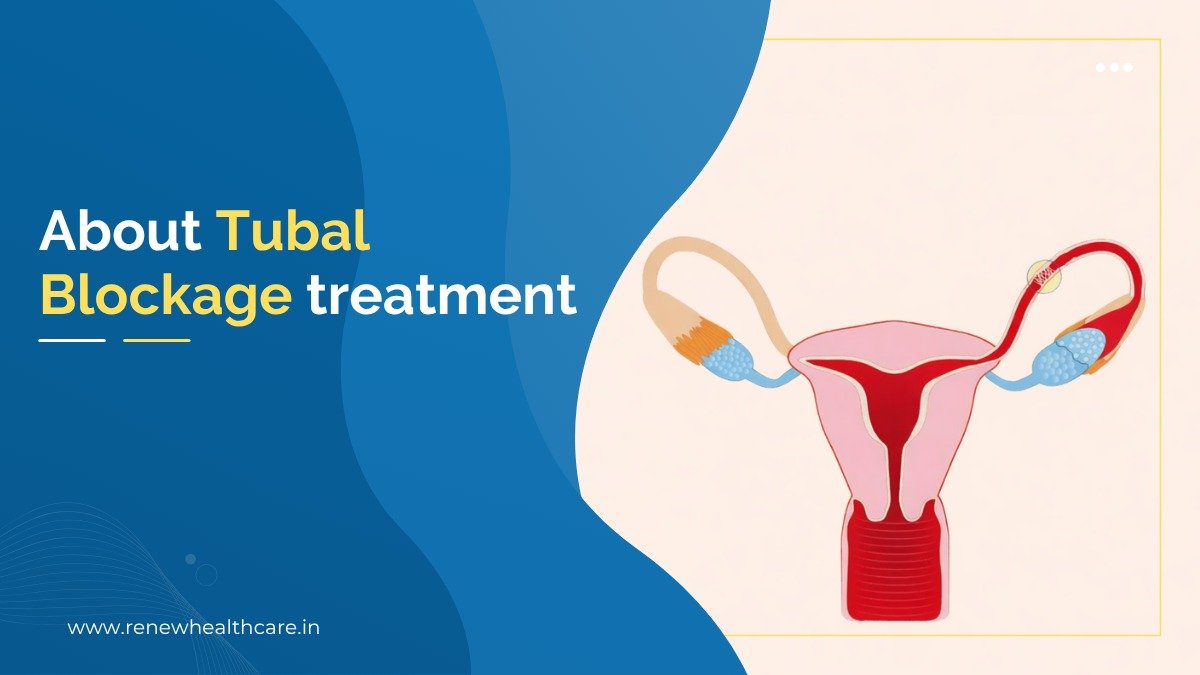
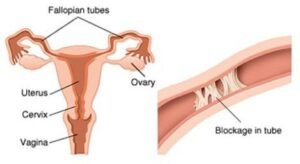
Tubal blockage, also known as blocked fallopian tubes, is a condition related to female reproductive organs. In such a condition, one or both fallopian tubes are partially or completely blocked, making it difficult for the egg and sperm to meet.
Here’s what’s supposed to happen. Every month, during ovulation, the ovaries release an egg which travels through the fallopian tube. Around this time, if intercourse happens, then the sperm travels up through the tubes & fertilizes with the egg. The fertilized embryo travels down from the tube to the uterus for implantation.
Now, if the tube is blocked at any point, the entire process halts. That’s what tubal blockage really means. It’s a physical barrier preventing fertilization or stopping the embryo from reaching the uterus.
When both tubes are blocked, it is called bilateral tubal blockage, and natural conception becomes extremely difficult without medical help.
The causes of tubal blockage are usually related to infection, inflammation, or structural damage. The most common causes of blocked fallopian tubes include:
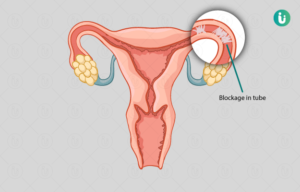
Understanding the types of fallopian tube blockage helps doctors decide the right fallopian tube blockage treatment.
This occurs near the uterus. It can be caused by tubal spasms, scarring from an inflammatory condition, or blockage from debris or tubal polyps.
This happens in the middle section of the tube. It is caused by tubal ligation, prior ectopic pregnancy, pelvic adhesions, or endometriosis.
Occurs at the end of the tube, i.e., near the ovaries. It is commonly associated with hydrosalpinx, pelvic inflammatory disease (PID) or extensive endometriosis.
When both tubes are completely blocked, it is referred to as bilateral tubal blockage.
Many women with blocked fallopian tubes may not experience noticeable symptoms. But when they do, symptoms of blocked tubes may include:
Over 30% of women who are diagnosed with infertility issues have a higher possibility of damaged or blocked tubes.
A specific kind of blocked fallopian tube, called Hydrosalpinx, may lead to abdominal pain & unusual vaginal discharge, but not every woman shows these blocked fallopian tube symptoms.
Hydrosalpinx is confirmed when the tube is filled with fluid, which makes it dilated & blocked. The fluid obstructs the egg & the sperm, thus preventing fertilization & pregnancy.
Diagnosis of blocked fallopian tubes typically involves imaging or minimally invasive procedures. Common diagnostic methods include:
A commonly used test where dye is passed through the uterus and X-rays are taken. If the dye doesn’t move through the tubes, it usually indicates tubal blockage.
This test uses ultrasound rather than X-rays. A small amount of fluid, usually saline or contrast, is gently passed into the uterus using a thin catheter. The doctor then observes how this fluid moves to check whether the tubes are open.
This procedure is often recommended alongside treatments like hysteroscopy in Kolkata, as both help doctors get a clearer understanding of uterine and fallopian tube health for accurate diagnosis and care.
Is a minimally invasive procedure where a tiny camera is inserted through a small incision in the abdomen. This laparoscopy treatment in Kolkata helps the doctor directly examine the tubes and identify any blockage.
It is considered the most accurate way to confirm blocked fallopian tubes but is usually reserved for cases where more clarity is needed.
Treatment depends on how severe the tubal blockage is and whether the patient is trying to conceive.
Simple lifestyle and dietary changes can support overall fertility, but there is no strong medical evidence that they can clear blocked fallopian tubes.
In mild cases, procedures such as laparoscopic tubal blockage surgery or tubal catheterization may help restore tubal function, the results can vary from person to person. When there is extensive damage or in cases of bilateral blocked fallopian tubes, surgery is usually less effective.
For women trying to conceive, IVF for tubal blockage is usually the most effective treatment. IVF bypasses the fallopian tubes completely. The egg is fertilized outside the body, and the embryo is then placed directly into the uterus.
In such cases, you may also benefit from proper preconception counselling in Kolkata, especially when planning the next steps in your fertility journey. A consultation at an IVF Center in Kolkata can help decide what approach would work best in our case.
Patients may also explore fertility preservation options such as egg freezing in Kolkata, especially if they are planning to delay pregnancy. Alternative fertility options may also be discussed and options like IUI treatment in Kolkata may be considered.
The most common complication of blocked tubes is Ectopic Pregnancy. If a fallopian tube is partially blocked, in that case, an egg may be able to fertilize but it may get stuck in the tubes after fertilization. This results in an ectopic pregnancy.
Ectopic pregnancy is a medical emergency and needs immediate treatment. Due to this risk, doctors often recommend IVF treatment instead of surgery for blocked fallopian tubes.
Blocked fallopian tubes are a common cause of infertility.
• Bilateral tubal blockage significantly reduces the likelihood of conceiving naturally
• If the fallopian tubes are partially blocked, then one can potentially conceive, but the chances of ectopic pregnancy increase.
• If only one fallopian tube is blocked, the blockage most likely will not affect fertility because the egg can still travel through the unaffected tube.
As a leading IVF Centre in Kolkata, Renew Healthcare is known for providing expert backed fertility solutions like IVF, IUI, ICSI, Genetic Counselling and more. Combining 20+ years of expertise and having delivered 6000+ babies, our multidisciplinary team led by Dr Rajeev Agarwal, thebest IVF doctor in Kolkata empowers your parenthood journey with expertise, compassion, and ethical care. We provide comprehensive care needed under one roof.
In the end, we believe in transparent guidance, ethical practices, and compassionate support at every stage of your journey, helping individuals and couples make informed decisions with confidence.
Blocked fallopian tubes are a common cause of infertility, and in many cases, they can be managed with the right care. Early diagnosis can make a real difference to the chances of conception.
The treatment approach varies depending on your condition and reproductive goals. From minimally invasive procedures to advanced options like IVF for tubal blockage.
If you’ve been experiencing symptoms or having difficulty conceiving naturally, it’s best to get evaluated without delay. In some patients underlying conditions like PCOS may also impact fertility. In such cases, appropriate PCOS treatment in Kolkata can help improve reproductive health.
Consult Dr Rajeev Agarwal, best fertility specialist in Kolkata, Renew Healthcare. With the right clinical approach, your parenthood journey can move forward with confidence.
In mild cases of bilateral tubal blockage, treatment may be done surgically. However, when the damage is significant and the goal is pregnancy, IVF is usually the most effective option.
Treatment depends on the type and severity. They may include laparoscopic surgery, catheterization, or IVF, depending on the case.
Many women don’t notice any symptoms. When symptoms occur, they may include pelvic pain, pain during intercourse, abnormal discharge or difficulty conceiving.
For fallopian tube blockage treatment, it is best to consult an experienced fertility specialist in Kolkata or visit a trusted IVF center in Kolkata, such as Renew Healthcare, for proper diagnosis and treatment planning.
Popular Searches
Icsi Treatment In Kolkata | Sperm Freezing In Kolkata | Painful Periods Treatment In Kolkata | Infertility Specialist In Jamshedpur | Gynaecologist In Kolkata | Hysteroscopic Surgeon In Kolkata | Embryo Freezing Service In Kolkata | Andrology Treatment In Kolkata | Tesa Pesa Treatment In Kolkata| Surrogacy In Kolkata
Popular Blogs
Sperm Life Span in Female Body | Foods To Avoid After Embryo Transfer | Intralipid Infusion Uses | Why IUI Fails: Reasons Explained | How To Fix Low Sperm Count | Ideal AMH Level For Pregnancy | What Is Vasectomy And Tubectomy



When undergoing IVF you may hear terms such as “Grade A embryo”, “blastocyst quality”, or “ICM and TE grading”. Lots...

The IVF journey can be one of the most emotionally intense experiences a couple faces. From hormone injections and medical...

Planning a pregnancy is one of the most meaningful steps in your life — but the journey doesn’t begin only...

Male fertility is closely associated with the health of sperm. A healthy sperm count and strong motility are essential for...
Meet Priyanka, who is a busy marketing professional in her early twenties. Her periods have slowly become heavier. They last...
Role of IVF in Overcoming Infertility Challenges in Endometriosis Endometriosis is an often painful disorder in which tissue similar to...

Journey towards parenthood Infertility and childlessness can be challenging journeys for couples to navigate. The emotional and physical toll of...
The "Save the Sibling" Program "Save the Sibling" program, a collaboration of Renew Healthcare, Cordlife, and HCG EKO offers hope...

What is PCOD? PCOD, also known as Polycystic Ovary Syndrome, is a common hormonal disorder that affects women of reproductive...
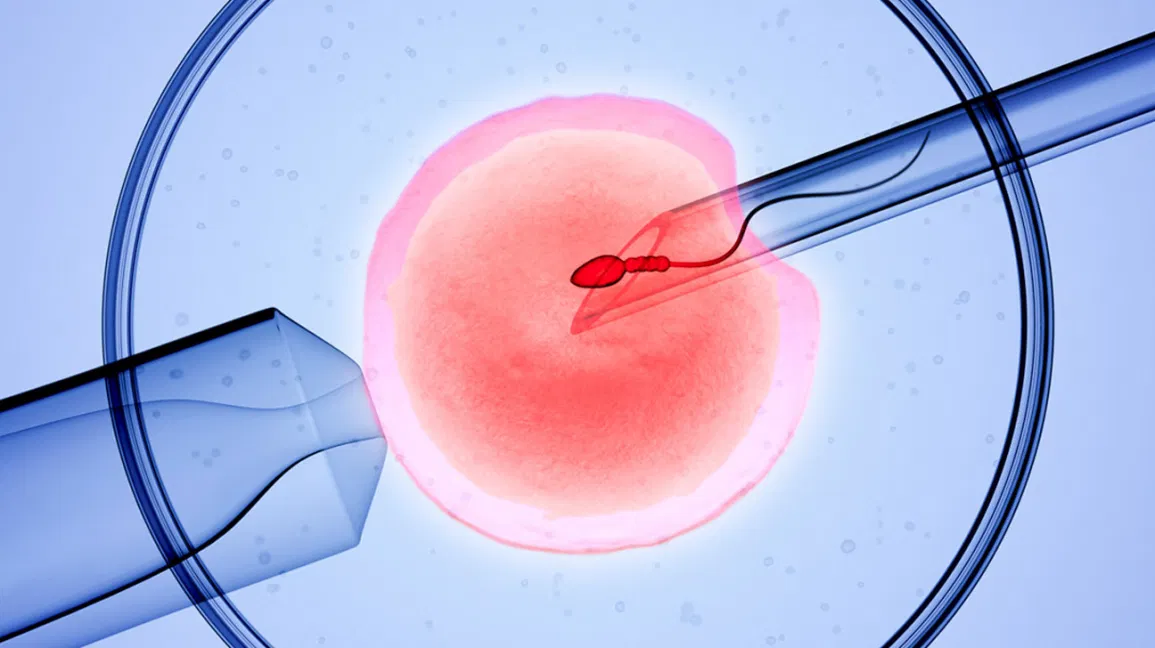
Intrauterine insemination aka IUI is a common fertility treatment that many couples opt for having a biological child. The experts...
Disclaimer :- The content shared by Renew Healthcare is intended for informational purposes only and should not be considered medical advice. For accurate diagnosis and personalized fertility care, please consult a qualified healthcare professional.