Request Call Back

Meet Priyanka, who is a busy marketing professional in her early twenties. Her periods have slowly become heavier. They last longer, the cramping is bad, and by mid-afternoon, she’s exhausted in a way that sleep can’t fix.
She thinks it’s stress, but honestly, it isn’t. What Priyanka has and what nearly half of all women will develop at some point in their lives are uterine fibroids. Most women with fibroids don’t even realize they have them. Some find out during a routine scan, while others spend months attributing their symptoms to something else. If you have recently been diagnosed and do not know what it means, you have come to the right place. Let us walk you through everything, including what fibroids are, why they develop, what they feel like, and when is the right time to act.
Renew Healthcare is one of Kolkata’s leading women’s health centres. Our team of gynaecologists treats fibroids with personalised care at every stage.
Uterine fibroids are also called leiomyomas. They are growths made of muscle and connective tissue that form in or on the wall of the uterus.
The important thing to remember is that fibroids are almost always benign. They are not cancerous. In fact, the chance of a fibroid becoming cancerous is about 1 in 350, which is extremely rare.
However, fibroids can range in size from a tiny seed to something as large as a watermelon. At times, they grow alone or in clusters. And, depending on where they are and how large they get, they can disrupt or affect an area of your life. Most fibroids commonly appear between the ages of 30 and 50, which are typically a woman’s reproductive years when hormone levels are highest.
There isn’t a single exact fibroid cause, but research strongly points to hormones. Estrogen and progesterone are the hormones that regulate your menstrual cycle and appear to fuel fibroid growth as well. Fibroids grow during pregnancy when hormone levels spike. They shrink after menopause when hormone levels fall. Besides hormones, there are other risk factors as well that increase your chances of developing fibroids.
So, to answer your query “are fibroids harmful?”, the answer is not generic.
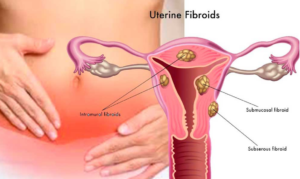
Where a fibroid sits; inside or on your uterus determines what it’s called and what symptoms it produces.
These grow embedded within the muscular wall of the uterus. They’re the most common type. Intramural fibroids can grow quite large and may distort the shape of the uterine cavity. In turn, this leads to heavy bleeding and pelvic pressure.
These fibroids grow just beneath the inner lining of the uterus, pushing inward into the uterine cavity. Even small submucosal fibroids can cause significant heavy bleeding and are the most likely type to interfere with fertility and embryo implantation.
These grow outward from the exterior surface of the uterus, pushing into the pelvis. They can grow very large. Subserosal fibroids are more likely to cause pelvic pressure, back pain, and urinary symptoms than bleeding.
These attach to the uterus via a thin stalk like a mushroom. They can be intracavitary (inside the uterus) or extend outside it. If the stalk twists, it can cause sudden, sharp pain.
Each fibroid may behave differently, which is why treatment plans are always individualised.
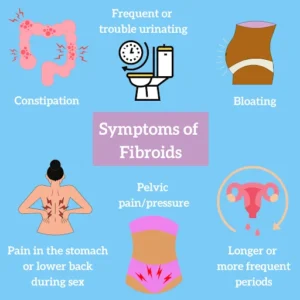
The tricky part is that many women with fibroids do not have any symptoms at all. They may find out during a routine ultrasound. But when symptoms appear, they can range from mild to life-disrupting.
Many fibroids are discovered during a routine pelvic examination. But imaging tests can help confirm the diagnosis correctly
Ultrasound for Uterine Fibroids Diagnosis
MRI for Fibroid Diagnosis
Hysteroscopy treatment in Kolkata helps doctors examine the inside of the uterus using a thin camera. It is especially useful for diagnosing and treating submucosal fibroids.
Laparoscopy treatment in Kolkata allows doctors to examine and remove fibroids through tiny incisions with faster recovery and less pain.
Treatment will depend on the size, number, and location of your fibroids.
For small, asymptomatic fibroids, monitoring is often the right approach. Regular ultrasounds track whether fibroids are growing. Many women manage comfortably without any intervention.
Several non-surgical fibroid treatment options use medication to manage symptoms:
If you are wondering how to shrink fibroids naturally, just read along.
Lifestyle changes won’t eliminate fibroids, but they can help manage symptoms and reduce risk factors:
For some women, minimally invasive options can offer effective treatment with faster recovery.
This fibroid surgery option is typically considered when:
If you’re concerned about fertility, speak with our team about IVF centre in Kolkata to protect your future options.
Early diagnosis can make a big difference in treatment prognosis. Women who are trying to conceive can consult the best IUI centre in Kolkata for fertility guidance if fibroids are affecting your reproductive health. You should consult a doctor if you experience:
As a leading IVF Centre in Kolkata, Renew Healthcare is known for providing expert backed fertility solutions like IVF, IUI, ICSI, Genetic Counselling and more. Combining 20+ years of expertise and having delivered 6000+ babies, our multidisciplinary team led by Dr Rajeev Agarwal, thebest IVF doctor in Kolkataempowers your parenthood journey with expertise, compassion, and ethical care. We provide comprehensive care needed under one roof.
In the end, we believe in transparent guidance, ethical practices, and compassionate support at every stage of your journey, helping individuals and couples make informed decisions with confidence.
Fibroids are common, but they don’t have to define your life. By understanding the signs and symptoms and seeking personalised care from a qualified gynaecologist, you can effectively manage fibroids and maintain a healthy, fulfilling life. If you’re planning pregnancy later and want to preserve your fertility options, you can also consult our specialists at an egg freezing centre in Kolkata.
Treatment options include medications for fibroids, hormonal therapy, non surgical fibroid treatment like UAE and RFA, myomectomy, and hysterectomy for fibroids. The best treatment depends on symptoms, fibroid size, and future pregnancy plans.
Doctors diagnose uterine fibroids using pelvic examinations, ultrasound, MRI scans, hysteroscopy, sonography, and laparoscopy. Transvaginal ultrasound is especially useful for detailed fibroid imaging.
Some fibroids may interfere with fertility or pregnancy depending on their location and size. However, many women with fibroids still conceive naturally and deliver healthy babies with proper monitoring.
There is no fixed “dangerous” size. Even small fibroids can cause severe symptoms if located near the uterine lining. Large fibroids symptoms may include heavy bleeding, pressure, bloating, and fertility problems.
Maintaining a healthy weight, exercising regularly, eating a balanced diet, reducing processed foods, and managing stress can help improve overall hormonal balance and reduce symptom severity.
Popular Searches
Best Andrology Clinic In Kolkata | Sperm Freezing In Kolkata | Surrogacy In Kolkata
Popular Blogs
Sperm Life Span In Female Body | Foods To Avoid After Embryo Transfer | Intralipid Infusion Uses | Why Iui Fails: Reasons Explained | How To Fix Low Sperm Count | Ideal Amh Level For Pregnancy

When undergoing IVF you may hear terms such as “Grade A embryo”, “blastocyst quality”, or “ICM and TE grading”. Lots...

The IVF journey can be one of the most emotionally intense experiences a couple faces. From hormone injections and medical...

Planning a pregnancy is one of the most meaningful steps in your life — but the journey doesn’t begin only...
Male fertility is closely associated with the health of sperm. A healthy sperm count and strong motility are essential for...
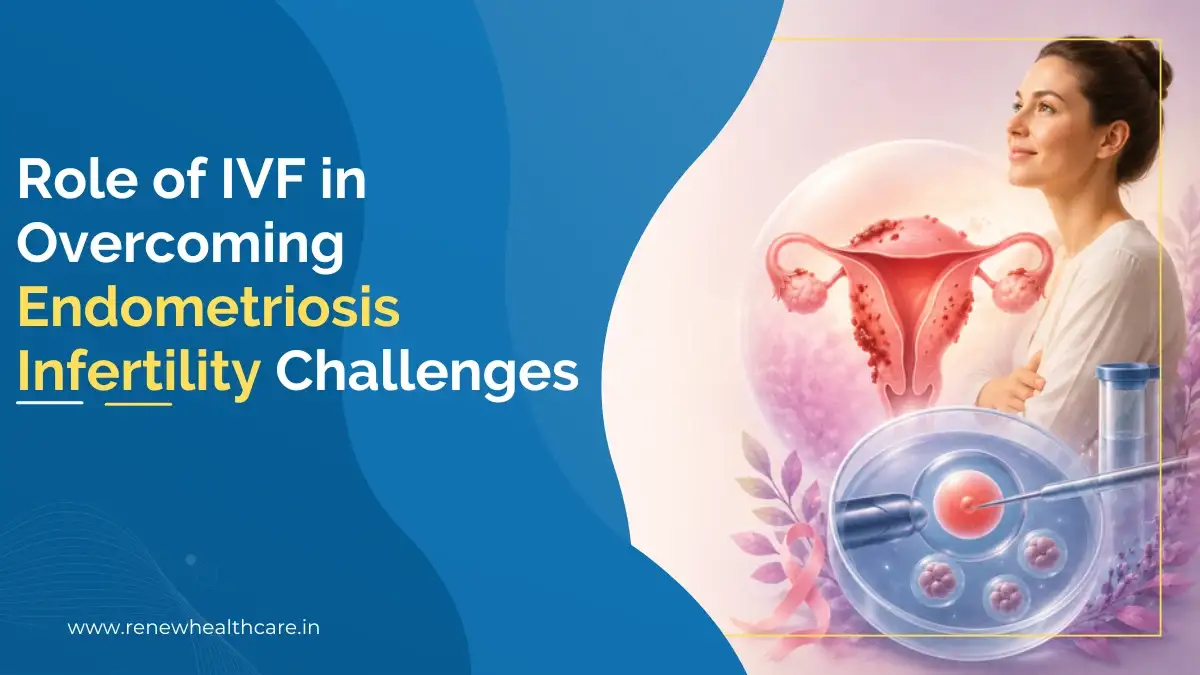
Role of IVF in Overcoming Infertility Challenges in Endometriosis Endometriosis is an often painful disorder in which tissue similar to...

Journey towards parenthood Infertility and childlessness can be challenging journeys for couples to navigate. The emotional and physical toll of...
The "Save the Sibling" Program "Save the Sibling" program, a collaboration of Renew Healthcare, Cordlife, and HCG EKO offers hope...

What is PCOD? PCOD, also known as Polycystic Ovary Syndrome, is a common hormonal disorder that affects women of reproductive...
Intrauterine insemination aka IUI is a common fertility treatment that many couples opt for having a biological child. The experts...
Getting sperm by any means for fertility purposes is known as sperm extraction. There are several ways to get sperm,...
Disclaimer :- The content shared by Renew Healthcare is intended for informational purposes only and should not be considered medical advice. For accurate diagnosis and personalized fertility care, please consult a qualified healthcare professional.