Request Call Back
The decision to choose permanent birth control options for men and women is a serious and personal choice for individuals and couples. Some people might consider permanent contraception because they feel that the family is complete, while others may have medical or genetic reasons to avoid pregnancy.
Two common permanent birth control procedures that we are going to talk about in this blog are vasectomy and tubectomy. We shall discuss in detail about what is vasectomy and tubectomy are and how the procedures work and shall also touch upon the difference between tubectomy and vasectomy that can help couples make informed healthcare choices.
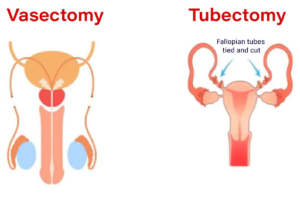
A vasectomy is a permanent birth control method for men. In this procedure, the tube that carries sperm from the testicles to the urethra, which are also known as vas deferens, are cut and sealed so that the sperm cannot mix with semen.
The vasectomy procedure is usually a short outpatient procedure that is performed under local anesthesia. During the vasectomy operation, the surgeon creates a very small opening in the scrotum to access the vas deferens. A small segment of the tube is cut and then sealed to block the passage of sperm.
Modern vasectomy surgery often uses the no-scalpel technique, which involves a tiny opening rather than a surgical incision. This approach leads to less discomfort and faster healing. After the vasectomy operation, men still continue to produce semen and ejaculation, but the semen no longer contains sperm. This procedure does not have any bearing on testosterone levels, sexual function, or libido.
Although vasectomy is a highly effective procedure, men are not considered sterile immediately. A follow-up semen test is usually required after a few months to confirm that sperm are no longer present.
Tubectomy is a permanent birth control procedure for women. If you want to understand the tubectomy meaning, just read along. It refers to a surgical method in which the fallopian tubes are blocked, tied, or removed to prevent the egg from meeting sperm.
In simple terms, it is a sterilization procedure that stops fertilization by preventing eggs from travelling from the ovaries to the uterus. Tubectomy procedures may be performed using different surgical techniques. Some procedures involve cutting the tubes, while others may seal them using clips, ties, or cauterization.
Many women choose tubectomy because it is a permanent solution for birth control that does not affect hormones, menstrual cycles, or menopause. The tubectomy operation will be performed after childbirth, during a caesarean delivery, or as a separate minimally invasive procedure using laparoscopy.
Both vasectomy and tubectomy are reliable long-term birth control methods for men and women who are certain that they do not want future pregnancies.
| Feature | Vasectomy | Tubectomy |
| Procedure | A vasectomy procedure is performed on men where the vas deferens (tubes carrying sperm) are cut and sealed to stop sperm from mixing with semen. | A tubectomy procedure is performed on women where the fallopian tubes are cut, blocked, or removed so the egg cannot meet sperm. The tubectomy operation usually involves abdominal surgery. |
| Complexity of Surgery | Vasectomy operation is a simpler and minimally invasive outpatient procedure that involves a small opening in the scrotum. | Tubectomy operation is comparatively more complex because it involves accessing the fallopian tubes inside the abdomen, often through laparoscopy. |
| Recovery Time | Recovery after vasectomy surgery is generally quick. Most men return to normal activities within a few days. | Recovery after a tubectomy procedure may take longer, typically around 1–2 weeks depending on the surgical method used. |
Vasectomy and tubectomy are safe and effective permanent birth control procedures when performed by qualified surgeons. However, like any medical procedure, the vasectomy procedure and tubectomy procedure can have certain risks and side effects.
Possible side effects of vasectomy:
Possible side effects of tubectomy:
Birth control may become a concern when people are confident that they will not want biological children in the future. Some people consider vasectomy and tubectomy because:
Couples are exploring reproductive options and can also learn about fertility treatments such as IVF centre in Kolkata or even explore preservation methods like egg freezing cost in Kolkata and sperm freezing in Kolkata.
Before opting for permanent contraception, consulting a fertility specialist is very important. A specialist can help explain tubectomy and vasectomy in detail, discuss long-term implications, and also review alternative family planning options.
At Renew Healthcare, couples receive guidance on reproductive health, fertility treatments, and family planning. No matter what path feels right for you, leaning on the guidance of a trusted medical professional is the kindest gift that you can give yourself and your future.
In fact, Renew HealthCare also offers assisted fertility procedures like sperm freezing, IUI cost in Kolkata, and more.
Choosing between vasectomy and tubectomy comes down to understanding a person’s needs, medical conditions, and long-term family goals. Through this blog, we’ve highlighted the vasectomy vs tubectomy difference, and hence we can infer that both remain reliable, permanent birth control options for men and women.
If you ever wonder vasectomy vs tubectomy, which is better, the answer rests in what works best for you as a couple. A thoughtful understanding of male vs female sterilization comparison, lets you make a confident decision.
Having said that, consulting a fertility expert is going to make sure that your choice is informed, safe, and aligned with your plans.
To that end, you can book an appointment with a fertility expert at Renew Healthcare for different types of genetic counselling and for discussing fertility preservation options like egg and sperm freezing in Kolkata.
The difference between tubectomy and vasectomy rests in the reproductive organs that are involved. A vasectomy procedure is performed on men and blocks the vas deferens so sperm cannot reach the semen. A tubectomy procedure is performed on women and blocks or removes the fallopian tubes so eggs cannot meet sperm.
Both procedures are considered safe when performed by trained surgeons. However, vasectomy surgery is less invasive because it is performed externally and requires only local anesthesia. A tubectomy operation, on the other hand, involves abdominal surgery and needs more recovery time.
Both procedures are highly effective permanent birth control options for men and women. When you understand the vasectomy versus adultery difference, it becomes clear that both methods prevent fertilization in different ways but are equally reliable when performed correctly.
Recovery time is one of the key aspects in vasectomy vs tubectomy differences. Vasectomy usually has a quicker recovery time as men will be able to return to normal activities within a few days. Tubectomy is performed using laparoscopic surgery. It may take around one to two weeks of recovery time depending on the procedure. In fact, you can also explore laparoscopy cost in Kolkata at Renew healthcare.
While reversal procedures do exist, both vasectomy and tubectomy should be considered permanent. Success rates of reversal can vary, which makes it important to carefully evaluate vasectomy versus tubectomy procedure risks and benefits before proceeding. For more information on this, it is best to get in touch with a specialist.



How Does Diet Play a Key Role in Male Fertility? You can think of sperm production as a manufacturing process....
What Is Usg Test: USG Full Form In Medical Terms & Its Meaning USG medical abbreviation is Ultrasonography, also known...

What Happens When You Release Sperm Daily? Even if they don’t talk about it openly, many men do have these...
What Is Bulky Uterus? If a doctor has ever told you that your uterus is bulky in size, it can...

So many men experience nightfall, but only a few feel comfortable talking about it openly. That is because many myths,...

What Is the HSG Test? The HSG full form is hysterosalpingography, and the imaging study itself is called a hysterosalpingogram....

Pregnancy can bring forth a number of physical and emotional changes. For many couples, it also raises a question on...

If you are exploring treatment options for infertility, wound healing or dealing with pregnancy complications, you may have come across...

Key Takeaways Understanding how many days can sperm live in the female body can help couples make informed decisions about...

Key Takeaway Your menstrual health is a reflection of your overall well-being. A delayed period can be your body's signal...
Disclaimer :- The content shared by Renew Healthcare is intended for informational purposes only and should not be considered medical advice. For accurate diagnosis and personalized fertility care, please consult a qualified healthcare professional.