Request Call Back
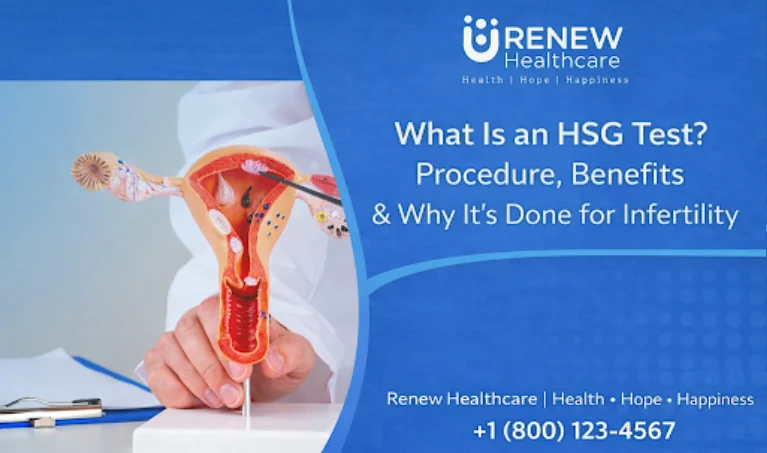
The HSG full form is hysterosalpingography, and the imaging study itself is called a hysterosalpingogram. The HSG test means a diagnostic X-ray procedure that is used to examine the uterus and fallopian tubes.
During the Hysterosalpingogram (HSG), a special contrast dye is inserted into the uterus through the cervix. X-ray images are then taken to observe how the dye flows through the uterus and fallopian tubes. This HSG test process helps doctors clearly visualize the reproductive organs.
If the dye moves freely through the tubes and spills into the pelvic cavity, the tubes are considered open. But if the dye stops at any point, it can indicate a blocked fallopian tube, which can affect fertility.
That is why the HSG fallopian tube test is also known as a fallopian tube blockage test. It also helps explain how HSG test helps detect blocked fallopian tubes, which is one of the most important aspects of infertility diagnosis.
Doctors might recommend the HSG test to investigate infertility. Understanding why HSG test is done helps patients feel more informed and comfortable during the diagnostic process. This test can be instrumental in identifying structural or functional issues in the reproductive system that might be preventing pregnancy. In fact, what is an HSG test and why is it done for infertility is one of the most common questions asked during fertility consultations.
One of the most common causes of infertility is fallopian tube blockage. The HSG blocked fallopian tube test shows whether the tubes are open and functioning normally. This explains how HSG test helps detect blocked fallopian tubes.
The HSG test helps detect abnormalities in the uterine cavity that may affect implantation.
Women who have experienced miscarriage or ectopic pregnancy can undergo hysterosalpingography to evaluate reproductive anatomy.
In some cases, an HSG test may be done after tubal ligation to confirm that the tubes are fully blocked.
The HSG test is performed in the radiology department and only takes a couple of minutes. Doctors generally schedule the HSG procedure 7 to 8 days after the first day of the menstrual cycle. This timing ensures that the test is done before ovulation. Understanding the HSG test procedure step by step for infertility diagnosis can help reduce anxiety before the test.
Before the test, it’s very important that the patients should inform the doctor if they have:
Before the HSG test process, doctors may recommend taking pain relief medication or using preventive antibiotics if an infection risk is present. Here is the HSG test procedure step by step for infertility diagnosis.
| Step | What Happens |
| Step 1 | You lie on an examination table similar to a pelvic exam position |
| Step 2 | A speculum is inserted to visualize the cervix |
| Step 3 | A thin catheter is placed through the cervix |
| Step 4 | Contrast dye is gently injected into the uterus |
| Step 5 | X-ray images track how the dye moves through the fallopian tubes |
| Step 6 | Images confirm whether tubes are open or blocked |
Many women also ask weather tube test painful or is HSG test painful and how long does the procedure take before undergoing the test.In fact, many fertility specialists highlight the benefits of HSG test for women trying to conceive, as it helps identify potential reproductive problems quickly.
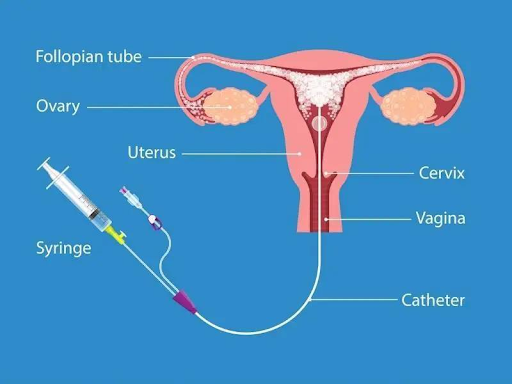
The HSG test plays an important role in infertility evaluation, which can provide valuable information about reproductive health. The most noteworthy benefits of the HSG fallopian tube test include:
The fallopian tube test can reveal certain reproductive conditions that might be affecting fertility. This further explains how HSG test helps detect blocked fallopian tubes and other structural problems.
Some conditions related to fallopian tubes include fallopian tube blockage, damage from sexually transmitted infections, tubal spasms, scarring from previous infections, or effects of prior ectopic pregnancy.
Here are some uterine structural abnormalities that can be detected by the HSG test.
| Uterine Condition | Description |
| Arcuate uterus | Mild indentation in uterine shape |
| Bicornuate uterus | Heart-shaped uterus |
| Septate uterus | Partition inside the uterus |
| Unicornuate uterus | Only one half of the uterus develops |
| Uterus didelphys | Double uterus |
| Uterine agenesis | Missing or underdeveloped uterus |
If pregnancy does not occur after 12 months of trying or 6 months if the woman is over 35, then fertility testing can be recommended. A specialist may advise an HSG fallopian tube test as part of a complete infertility evaluation.
Patients seeking fertility care can get in touch with experts at Renew Healthcare, which is a trusted IVF centre in Kolkata. We offer advanced reproductive diagnostics and treatment.
Depending on the diagnosis, treatment options can include:
Many patients also inquire about the HSG test cost or tube test price before undergoing the procedure as part of infertility evaluation.
When you understand what an HSG test is and why it is done for infertility, it can make your entire journey feel far less overwhelming. The HSG test can offer quick and reliable insights about fallopian tube blockage, shape of the uterus, and more. The clarity that this cost provides is invaluable in moving closer to conception.
With timely diagnosis, expert guidance, and access to advanced fertility options, there’s always a path forward. After all, with the right care and support, every step is going to bring you closer to building the future of your dreams.
The HSG test may cause mild cramping during the dye injection. Most women describe this discomfort as temporary and manageable. Pain usually subsides within a few minutes to a few hours.
Doctors can recommend the HSG fallopian tube test when couples experience difficulty conceiving. This test is used to check for fallopian tube blockage or uterine abnormalities.
Yes, many doctors say that it is safe to try for pregnancy shortly after the HSG test. In some cases, the dye used in hysterosalpingography can help clear minor blockages, which can help improve fertility temporarily.
The HST test procedure is very quick and takes about 5 minutes to complete. If you include preparation time, you may spend around 15 to 20 minutes on the whole thing.
The benefits of HSG test for women are that it can help detect blockages in the fallopian tubes, identify uterine abnormalities, and provide clear imaging for accurate diagnosis. The procedure can also help in temporarily improving fertility by flushing minor blockages.
The HSG test is generally safe, but like any other medical procedure, there can be mild side effects. Some women may experience temporary cramping, light spotting, or slight discomfort after the HSG test process.

Pregnancy can bring forth a number of physical and emotional changes. For many couples, it also raises a question on...

If you are exploring treatment options for infertility, wound healing or dealing with pregnancy complications, you may have come across...

The decision to choose permanent birth control options for men and women is a serious and personal choice for individuals...

Key Takeaways Understanding how many days can sperm live in the female body can help couples make informed decisions about...

Key Takeaway Your menstrual health is a reflection of your overall well-being. A delayed period can be your body's signal...

Key Takeaways A few small blood clots are usually nothing to worry about when your flow is heavy. If you...

Key Takeaways Learning how to prepare your body for pregnancy through intentional preconception care is one of the most important...

Key Takeaways About 10% of women of reproductive age worldwide have endometriosis Pain from the condition can be way out...

Key Takeaways Sperm cramp is a common non-medical term used to describe any pain in the testes, scrotum or pelvic...
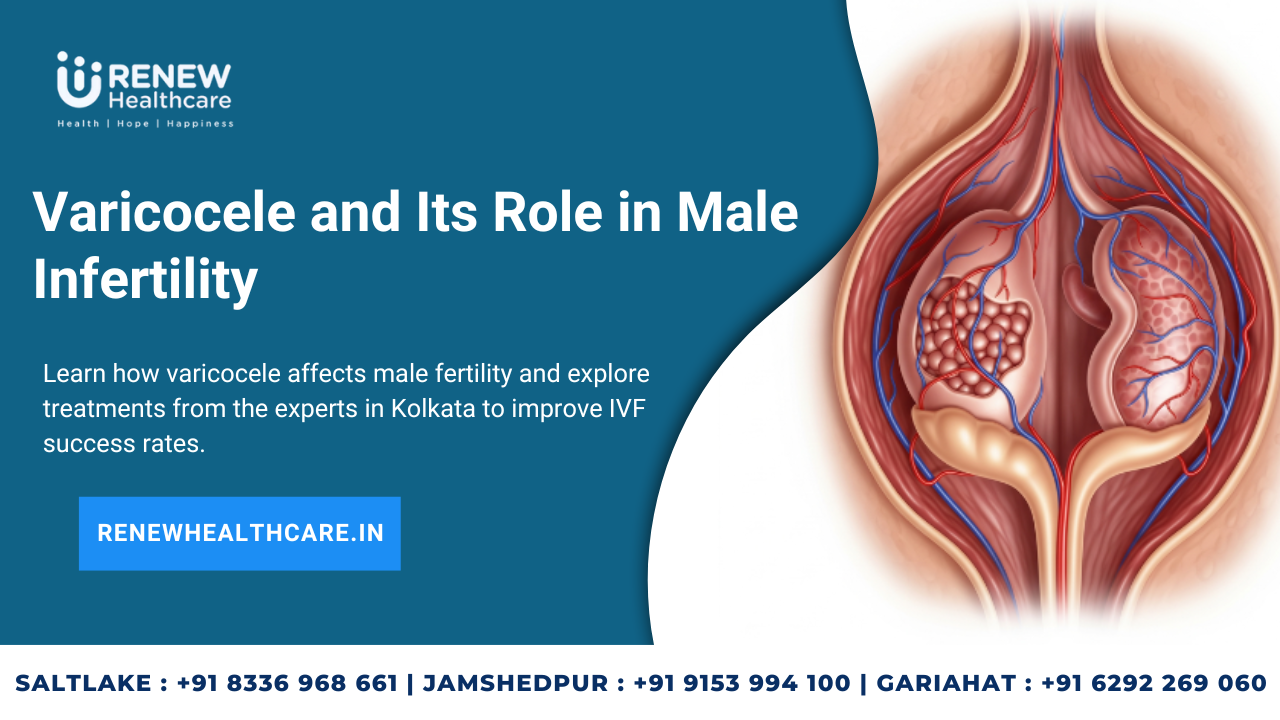
Male infertility is less talked about, but it is, of course, as important as female infertility. As per leading infertility...