Request Call Back
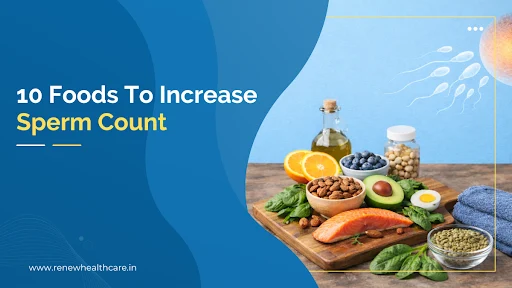
You can think of sperm production as a manufacturing process. Like any production line, the output is going to be as good as the raw materials that are going in.
Sperm takes around 74 days to fully develop. That means the dietary choices that you make today are literally shaping the sperm you’ll have two and a half months from now.
The link between foods to increase sperm fertility and sperm health can be understood through these factors:
If dietary and lifestyle modifications are not leading to the desired results, speaking with a specialist at an IVF center in Kolkata can help determine underlying reproductive issues and direct the next course of action.
Before we talk about what are the foods to increase sperm count naturally in men, let us try to understand which nutrients are doing the heavy lifting.
| Nutrient | Why It Matters |
| Folate (B9) | Supports healthy sperm replication |
| Zinc | Helps testosterone production and DNA synthesis |
| Omega-3 Fatty Acids | Promotes healthy sperm cell formation and motility |
| Vitamin B12 | Boosts sperm quantity and motility via DNA health |
| D-Aspartic Acid | This is an Amino acid that stimulates testosterone release |
| B-Complex | Provides full-spectrum sperm health and hormonal protection |
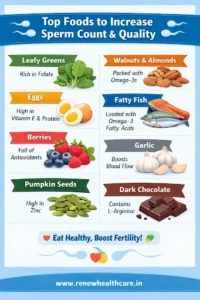
Here are the best sperm count boosting foods for male fertility. You can think of this as your male fertility grocery list that has the best nutrients and foods to help increase sperm count fast:
Zinc is found abundantly in oysters. Zinc is the single most important mineral for male fertility, driving testosterone production, DNA synthesis, and sperm motility. On a side note, its aphrodisiac reputation is also not entirely a myth!
Walnuts are a remarkable fertility food. Rich in omega-3 fatty acids, folate, zinc, selenium, and B6, they support every dimension of sperm health.
Salmon brings together omega-3 fatty acids, selenium, and vitamin D. It supports sperm cell membrane integrity, protects against oxidative damage, and drives sperm production.
Eggs are rich in vitamin B12, zinc, and selenium, which makes them a quietly effective food for healthy sperm. They’re also high in protein, which supports overall hormonal health. Scrambled, poached, or boiled; however you eat them, they count.
Lycopene is the red pigment in tomatoes, and it’s one of the most potent antioxidants for male fertility. It has been shown to improve sperm concentration, motility, and morphology.
The compound called s-allyl cysteine found in garlic can stimulate testosterone production and increase sperm count. It also has strong anti-inflammatory properties that benefit overall reproductive health.
Spinach, fenugreek leaves, methi, and kale are among the richest natural sources of folate. This is the vitamin that directly supports healthy sperm replication. Low folate levels have been consistently linked to fragmented sperm DNA. When we talk about Indian foods to increase sperm count naturally; spinach, methi, drumstick leaves are both accessible and effective.
Amla has exceptionally high antioxidant content protects sperm cells from oxidative damage, improving both the quality and quantity of sperm. It can be consumed raw, as juice, or in dried form. This is one of the most potent Indian foods to increase sperm count.
Fenugreek is a staple in Indian cooking and it is also one of the most used herbs in male fertility supplements globally. It stimulates testosterone production, improves sperm count and motility, and has been shown to enhance libido.
When we are talking about the foods to increase sperm count, fruits deserve a specific mention. Citrus fruits (vitamin C), pomegranate (antioxidants and nitrates), and bananas (vitamin B6, bromelain) all contribute to hormonal balance and sperm health.
Understanding what to cut is just as important as knowing what to add. Here are some of the best foods to avoid that lower sperm count.
Among the foods to avoid when looking for foods to increase sperm count, processed meats like sausages, bacon, and more are strongly linked to lower sperm concentration and poor motility. If you want to increase sperm count naturally, switch to lean protein sources like chicken. It is a far better food choice to increase male fertility.
While dairy has its benefits, high-fat options like whole milk, cheese, and cream can reduce sperm count and quality. If you are putting together a diet plan to increase sperm count and sperm quality, it is a good idea to go for low-fat dairy or plant-based alternatives.
Soy contains phytoestrogens, which mimic estrogen and can negatively impact sperm concentration if consumed excessively. If you’re focused on choosing foods to increase sperm count and quality, limit soy intake and choose balanced plant proteins like lentils and beans in moderation. These foods form key components of Indian foods that increase sperm count.
High caffeine intake from coffee, energy drinks, and sodas can lower sperm count. For people who are exploring how to improve sperm motility naturally, cutting back on caffeine is very important. Instead, you can replace it with herbal teas or limit caffeine intake to support foods to improve sperm count effectively.
Chemicals like pesticides and BPA act as xenoestrogens that disrupt hormone balance and reduce sperm concentration. Even if you’re eating the best foods to increase sperm count, exposure to these toxins can counteract the benefits. Therefore, it is always a good idea to choose organic produce, wash foods thoroughly, and opt for BPA-free packaging to support the efficacy of natural foods for improving male fertility and sperm health.
No doubt in saying that diet is the foundation of good health, but it works best along with a few key lifestyle habits.
If you want to explore fertility support beyond lifestyle changes, Renew Healthcare offers a comprehensive range of fertility services like sperm freezing in Kolkata, egg freezing, and surrogacy in Kolkata.
Sperm count has dropped by approximately 59% over the past 38 years. Research shows that in around 35% of couples dealing with infertility, a male factor is identified.
The good news is that sperm health is not entirely out of your hands. Diet is one of the most direct and actionable levers that you have. The right foods to increase sperm count can meaningfully improve sperm concentration, motility, and overall quality. So, no matter if you’re actively planning a family or simply thinking about your long-term health, what you eat matters more than you think. Also, if you’re already handling concerns around fertility, the team at Renew Healthcare the best Fertility Clinic can support you every step of the way from preconception counselling in Kolkata to PCOS treatment in Kolkata.
Yes and the evidence is consistent. Diet, which is rich in antioxidants, folate, zinc, and omega-3 fatty acids, is associated with higher sperm concentration, motility, and improved morphology. In fact, diet is one of the most accessible tools available for increasing sperm count naturally in men. It will not replace medical intervention when needed, but it is definitely a powerful and often underestimated starting point.
If you want to get a sperm function test in Kolkata, Renew Healthcare is the right place for you.
Chronic stress can trigger elevated cortisol levels, which directly suppress testosterone production. Since testosterone is the primary driver of sperm production, sustained high levels of cortisol can reduce both sperm count and motility.
They do, and walnuts in particular, have solid research behind them. Walnuts are a beneficial source of omega-3 fatty acids, folate, zinc, selenium, and B6. All this collectively supports sperm vitality, motility, shape, and size. In fact, pumpkin seeds, sunflower seeds, and flaxseeds are also excellent sperm count-boosting foods.
Sperm takes approximately 74 days to complete its development cycle. This means that meaningful changes from dietary to lifestyle improvements can take around two to three months to show up in semen analysis. If you would like an assessment, Renew Healthcare can support you through this journey. In fact, they also offer different types of genetic counseling (including counseling for thalassaemia) for couples who are planning parenthood.
Yes, fruits are rich in vitamin C, lycopene, antioxidants, and folate. All this can protect sperm from oxidative damage and support healthy sperm production. Moreover, citrus fruits, pomegranate, and bananas are also very beneficial.
Related Blogs
Can Diet Improve Male Fertility?
How to Improve Motility and Count Naturally
Semen Analysis and Infertility Treatment
5 Effective Treatment Options for Low Sperm Count in Men
Male Infertility: Common Causes and Solutions
Disclaimer: The content shared by Renew Healthcare is intended for informational purposes only and should not be considered medical advice. For accurate diagnosis and personalized fertility care, please consult a qualified healthcare professional.

What Is Usg Test: USG Full Form In Medical Terms & Its Meaning USG medical abbreviation is Ultrasonography, also known...

What Happens When You Release Sperm Daily? Even if they don’t talk about it openly, many men do have these...
What Is Bulky Uterus? If a doctor has ever told you that your uterus is bulky in size, it can...

So many men experience nightfall, but only a few feel comfortable talking about it openly. That is because many myths,...

What Is the HSG Test? The HSG full form is hysterosalpingography, and the imaging study itself is called a hysterosalpingogram....

Pregnancy can bring forth a number of physical and emotional changes. For many couples, it also raises a question on...
If you are exploring treatment options for infertility, wound healing or dealing with pregnancy complications, you may have come across...

The decision to choose permanent birth control options for men and women is a serious and personal choice for individuals...
Key Takeaways Understanding how many days can sperm live in the female body can help couples make informed decisions about...

Key Takeaway Your menstrual health is a reflection of your overall well-being. A delayed period can be your body's signal...
Disclaimer :- The content shared by Renew Healthcare is intended for informational purposes only and should not be considered medical advice. For accurate diagnosis and personalized fertility care, please consult a qualified healthcare professional.